HomeRomeHow to Become King Without Calling Yourself King · 1 Day
How to Become King Without Calling Yourself King · 1 Day
Rome · Walking Tour

How to Become King Without Calling Yourself King · 1 Day

6 hrsWalk
2.0 kmDistance
11Stops
30Chapters

About this route

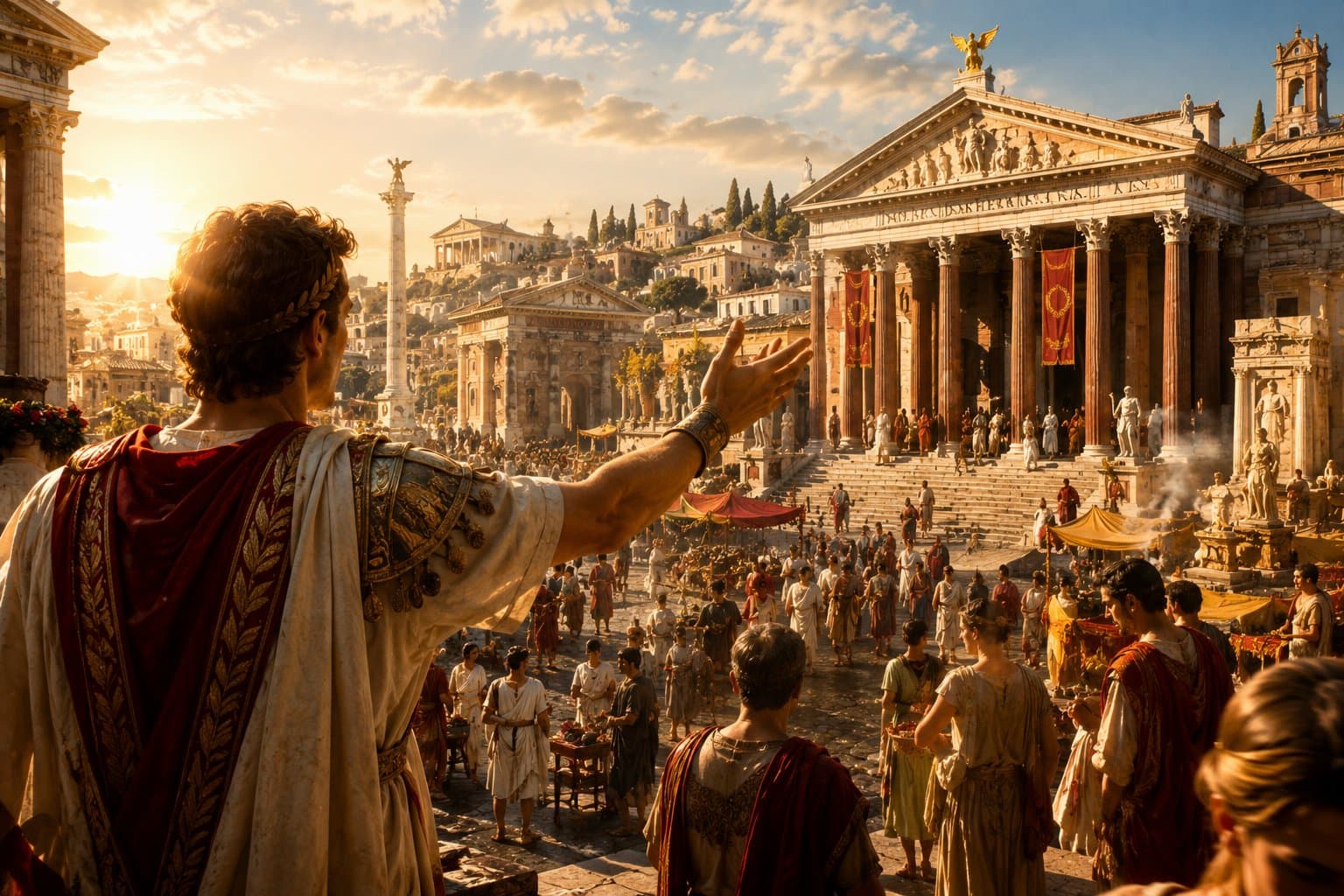
Imagine the most audacious political con in history: stand at the Mausoleum of Augustus where a man began planning his own legacy before declaring himself emperor, follow the marble propaganda of the Ara Pacis where peace was advertised and power quietly consolidated, walk the Roman Forum where Augustus performed the fiction of restoring the Republic he had just destroyed, and arrive finally at the House of Livia — the deliberately modest home of the man who rebuilt all of Rome in marble yet went home every night to four painted rooms, because the modesty itself was the throne.

🎧 Narrated audio tour⬇️ Works offline🌐 English📍 11 stops
Narrated by
rrawi
English

Stops on the route

11 stops · 30 chapters
Mausoleum of Augustus
01

Mausoleum of Augustus

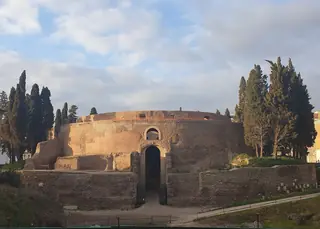
Augustus began building this tomb in 28 BC — before formally declaring himself emperor — making it the opening move in a lifelong campaign to control how…

~45 min here·5 chapters
Whose Monument Is This, Really?Free chapter

The Mausoleum of Augustus was a deliberate political statement built to project dynastic permanence — but the dynasty it was built for ended in disgrace, and the building went on to tell a completely different story.

0:000:00
How Augustus Seized Power Without Calling It ThatFree chapter

Augustus's genius was performing humility while accumulating total control — the "Great Refusal" of January 27 BC was political theater designed to make a power grab look like a reluctant public service.

0:000:00
The First Body in an Unfinished Tomb

The first person buried in the Mausoleum was not Augustus — it was his 19-year-old nephew Marcellus, his chosen heir, who died before the building was even complete, throwing Augustus's succession plans into crisis.
🔓
Unlock 2 more chapters in the app
Get the app
Ara Pacis
02

Ara Pacis

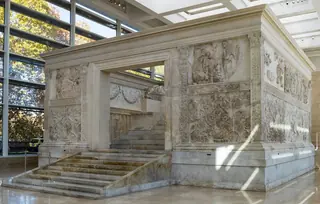
This altar of marble is Augustus's most sophisticated piece of political theater: every carved surface — from the processional frieze of his family to the…

~45 min here·5 chapters
The Moment That Made the Monument

The Ara Pacis was not built to celebrate a military victory — it was built to celebrate Augustus's return from the provinces, and that distinction tells you everything about how he wanted to be seen.

What the Stone Actually Says

The Ara Pacis is a precisely engineered piece of political communication — every carved surface carries a specific message about who Augustus was and what his rule meant.

The Family on the Frieze

The processional frieze turns Augustus's family into a political asset — the identifiable faces of Agrippa, Livia, and Tiberius signal dynastic stability to every Roman who sees them.

🔓
Unlock 2 more chapters in the app
Get the app
Pantheon
03

Pantheon

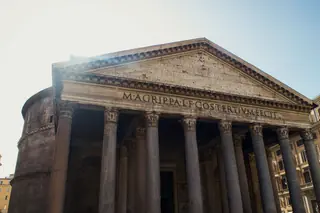
Built by Agrippa and rebuilt by Hadrian with Agrippa's name still on the front, the Pantheon is living proof of Augustus's genius for loyalty networks — the…

~45 min here·6 chapters
The Man Who Won an Empire for Someone Else

Marcus Agrippa — the military genius behind Augustus's rise — built the original Pantheon in 27 BCE to commemorate the victory at Actium, yet consistently redirected all credit toward Augustus.

What the Original Pantheon Was Actually For

Agrippa's first Pantheon was a deliberate political monument — a temple to all the gods that tied Augustus's new regime to divine sanction and commemorated the end of Rome's civil wars.

The Engineering Gamble Inside the Dome

Hadrian's rebuilt Pantheon contains the world's largest unreinforced concrete dome — 43.3 meters in diameter, equal to its height, forming a perfect interior sphere — achieved through a progressive lightening of the concrete aggregate from base to oculus.

🔓
Unlock 3 more chapters in the app
Get the app
Roman Forum-Palatine Archaeological Area
04

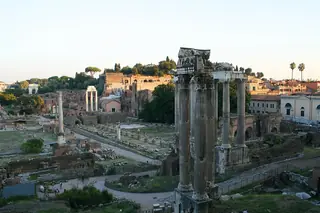
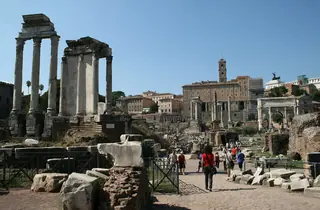
Roman Forum-Palatine Archaeological Area

The combined Forum and Palatine site contains the essential physical evidence of Augustus's political strategy — from the Forum where he performed Republican…

~3 hrs here·1 chapters
The Valley That Became Rome's Heartbeat

The Roman Forum grew from a marshy burial ground between two hills into the political and civic center of the ancient world over roughly a thousand years.

Basilica Julia
05

Basilica Julia

Inside Roman Forum

Caesar started it, Augustus finished it and kept Caesar's name on it — a perfect small-scale demonstration of the political art at the heart of this tour:…

~15 min here·2 chapters
What Julius Caesar Started, Augustus Finished

The Basilica Julia was begun by Julius Caesar and completed under Augustus, making it a key piece of Augustan political branding in the heart of the Forum.

The Noise Inside a Roman Courthouse

The Basilica Julia functioned as a multi-purpose civic hall — home to the Centumviral Court, offices, and banking — making it the beating heart of Roman public life.

Curia Julia
06

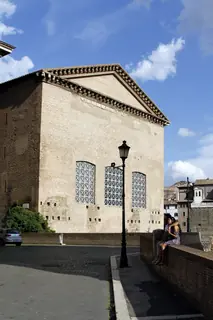
Curia Julia

Inside Roman Forum

The Senate house Augustus completed was the essential prop for his entire political performance — you cannot claim to have restored the Republic without a…

~20 min here·2 chapters
The Building Where the Republic Was Performed

Augustus completed the Curia Julia as a deliberate political statement — the Senate house was the stage on which he acted out the fiction of restoring republican government while holding all real power himself.

Fire, Diocletian, and a Building That Survived Everything

A fire in 283 AD destroyed the Curia; Emperor Diocletian rebuilt it with the marble floor and wall niches visible today, and its later conversion into a church is what preserved it through the medieval period.

Rostra
07

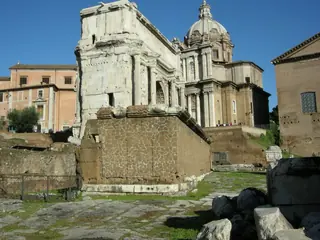
Rostra

Inside Roman Forum

Augustus rebuilt and repositioned this speaker's platform — the same platform where Cicero's severed head was displayed in 43 BC — embedding it in his…

~10 min here·3 chapters
The Republic's Stage for Voice and Power

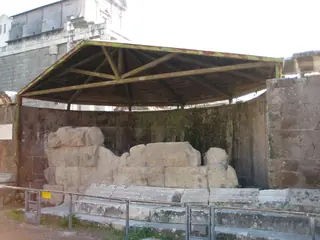
The Rostra was the Roman Republic's most charged public speaking platform — a long rectangular masonry podium whose very name came from the bronze ship rams bolted to its face, trophies of a naval victory that turned a political stage into a monument to Roman dominance.

What Happened When the Speaking Stopped

In 43 BC, Mark Antony had Cicero killed and displayed his severed head and hands on the Rostra — the very platform from which Cicero had delivered his most devastating speeches — turning Rome's symbol of free oratory into a monument of political terror.

How Augustus Rebuilt the Stage He Inherited

Augustus physically relocated and rebuilt the Rostra as part of his late-first-century BC redesign of the Forum, transforming a platform soaked in Republican blood and memory into a carefully managed piece of his own political theater — keeping the form of the Republic while hollowing out its substance.

Temple of Castor and Pollux
08

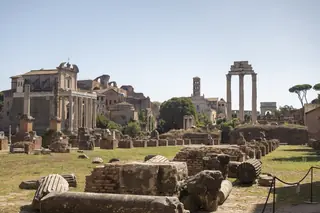
Temple of Castor and Pollux

Inside Roman Forum

Augustus's family rebuilt this temple on the site of Rome's oldest miracle story and rededicated it under Tiberius in 6 AD — a textbook example of his strategy…

~10 min here·2 chapters
The Gods Who Showed Up at the Spring

Roman tradition held that two divine horsemen appeared at the spring of Juturna in the Forum after the Battle of Lake Regillus, and a temple was vowed to them on that spot — a founding legend that gave the site extraordinary sacred weight.

How Augustus Rebuilt a Legend for Himself

The Augustan regime rebuilt and rededicated the temple — completed under Tiberius in 6 AD — as part of a deliberate strategy of wrapping new imperial power in the language of ancient Roman tradition and piety.

Temple of Divine Julius Caesar
09

Temple of Divine Julius Caesar

Inside Roman Forum

This is the physical foundation of Augustus's entire claim to authority: by engineering Caesar's official deification in 42 BC, he made himself divi filius —…

~10 min here·1 chapters
The Night Octavian Needed a Dead Man

Caesar's deification was a calculated political move that gave Octavian the title "son of a god" — the foundation of his authority without ever calling himself king.

House of Augustus
10

House of Augustus

Inside Palatine Hill

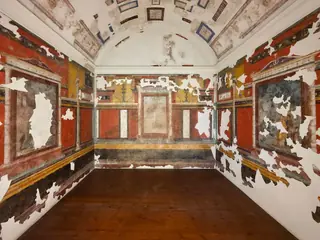
The House of Augustus is the most intimate proof of his political calculation: rooms small enough to signal Republican modesty, walls painted with…

~30 min here·1 chapters
The Wall That Wasn't Really a Wall

The House of Augustus uses Roman Second Style painting — trompe-l'oeil columns, stage facades, and perspective tricks — to dissolve solid walls visually, creating an illusion of depth and grandeur in intimate, physically modest rooms.

House of Livia
11

House of Livia

Inside Palatine Hill

Attributed to Livia through a single lead pipe inscription, this compact, beautifully painted house is the quiet final answer to the tour's central question —…

~30 min here·2 chapters
What the House of Rome's First Family Actually Looked Like

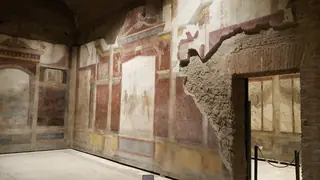
The house attributed to Livia is a compact, refined residence whose four principal rooms open off a quadrangular atrium — deliberately modest in scale for someone at the center of Roman power.

The Paintings That Turned Walls Into Windows

The tablinum and triclinium walls carry sophisticated mythological and architectural paintings — Polyphemus pursuing Galatea, Mercury approaching Io and Argus, and cinnabar-red panels opening onto sacred landscapes — all datable to around 30 BC, placing them at the very birth of the Augustan age.

FAQ

How long does this route take?

The audio narration is 58:59 in total. If you pause to look around and take photos, budget 6 hrs. You can pause and resume any time — including the next day.

Is the tour narrated in my language?

This version is narrated in English by rrawi. Other language versions may be available — check the language switcher on this page.

Can I listen without an internet connection?

Yes. This self-guided audio tour works fully offline — download it in the rrawi app before you set off, and GPS automatically triggers the next chapter as you walk. No signal needed.

Do I have to start from the first stop?

No — you can start or jump to any stop in the app. The route works in order, but each stop stands on its own if you need to skip.

What does the free part include?

Different tours offer different free preview chapters depending on the content. Download the rrawi app and subscribe to a City Pass to unlock all 30 chapters and experience the full route.

Ready to walk Rome?

Download rrawi and let rrawi walk with you.

Walk with the app
First chapter at each stop is free
Get the app