HomeRomeRome After Dark: Water, Power, and Crowds · 1 Day
Rome · Walking Tour

Rome After Dark: Water, Power, and Crowds · 1 Day

2 hrsWalk
3.1 kmDistance
7Stops
29Chapters

About this route

Imagine asking what keeps Rome alive after dark, as the travelers’ theater of the Spanish Steps gives way to Trevi Fountain’s ancient water and cinematic wishes, the Pantheon’s open eye confronts death and eternity, and Piazza Trilussa answers with poetry, aperitivo, and voices filling the street beneath a still-running fountain.

🎧 Narrated audio tour⬇️ Works offline🌐 English📍 7 stops
Narrated by
rrawi
English

Stops on the route

7 stops · 29 chapters
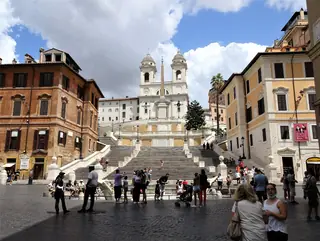
Spanish Steps
01

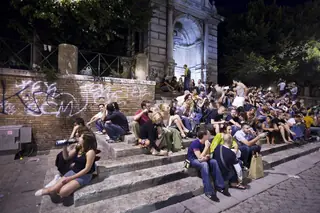
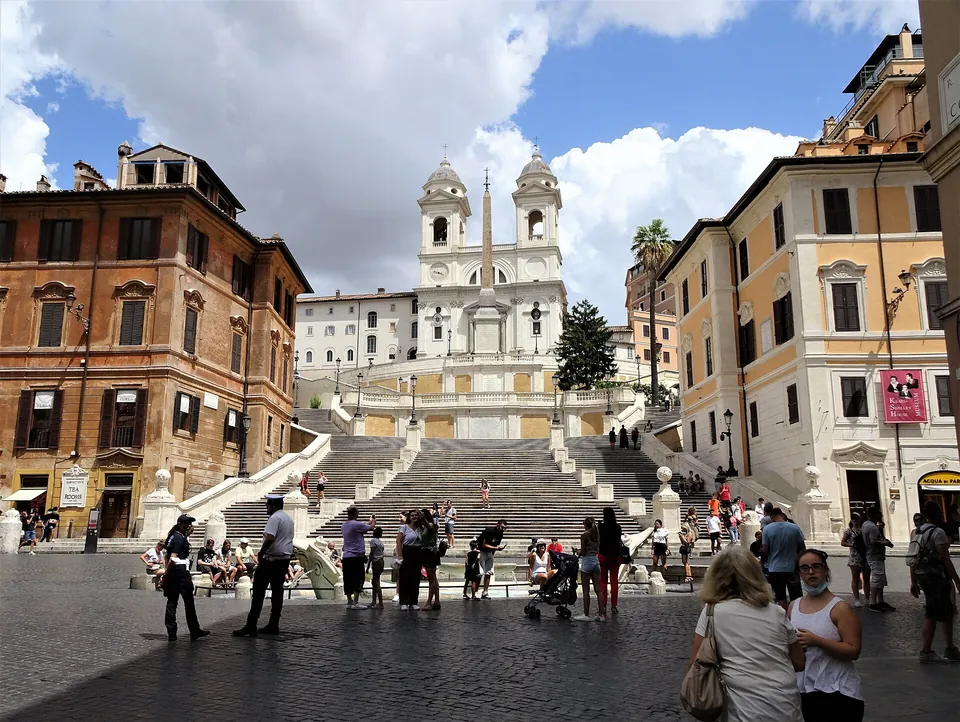
Spanish Steps

Selected to open the night tour where Grand Tour travelers, artists, fashion, and flirtation made a monumental staircase an international symbol of falling in…

~10 min here·5 chapters
Why These Steps Don't Belong to SpainFree chapter

The Spanish Steps were built through a tangle of French money, papal politics, and competing architects — the name "Spanish" is almost an accident of geography.

0:000:00
The Competition That Almost Went the Wrong WayFree chapter

Francesco de Sanctis won the 1717 design competition, but his collaborator Alessandro Specchi was so established that historians long assumed Specchi had produced the winning entry.

0:000:00
What the Stonework Is Actually Saying

The sculptural decoration on the Steps encodes a precise political balance between French royal patronage and papal authority — both powers that shaped its creation.
🔓
Unlock 2 more chapters in the app
Get the app
Trevi Fountain
02

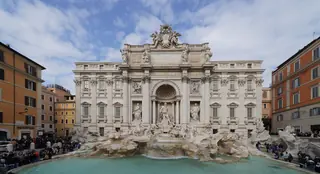
Trevi Fountain

Selected for its vivid union of the ancient Aqua Virgo, Baroque theater, coin-toss wishes, and the nocturnal romance immortalized by La Dolce Vita.

~10 min here·3 chapters
The Man Who Never Saw His Masterpiece

Nicola Salvi won the commission for the Trevi Fountain through a politically charged competition, devoted nearly two decades to it, and died before it was finished — making the fountain both his life's work and his posthumous legacy.

Two Thousand Years of Water Under Rome

The water feeding the Trevi Fountain comes from the Aqua Virgo, an aqueduct built by Marcus Agrippa in 19 BC — making the water supply nearly 2,000 years older than the Baroque fountain it feeds.

Coins, Cinema & La Dolce Vita

The Trevi Fountain became a global romantic symbol through the coin-toss tradition and Fellini's 1960 film, cementing its identity as the place where Rome's ancient grandeur meets modern desire.

Pantheon
03

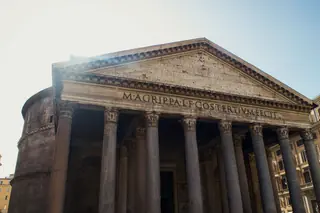
Pantheon

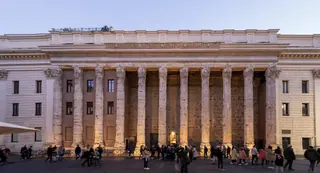
Selected to deepen the night’s mood through a pagan temple turned church, its ancient dome and oculus, and the tombs of Raphael and Italy’s kings.

~20 min here·7 chapters
The Man Who Put His Name on a God's Temple

The Pantheon's famous inscription — Marcus Agrippa's name — belongs to a man who won Rome's defining battle but spent his life directing credit elsewhere, making the inscription's survival one of history's quiet ironies.

How Hadrian Built the Impossible Dome

Hadrian's rebuilt Pantheon contains the world's largest unreinforced concrete dome — 43.3 meters wide, equal in height to its diameter, engineered with progressively lighter materials toward the top to prevent collapse.

The Open Eye That Lets in Rain

The Pantheon's oculus — roughly 8 to 9 meters wide and open to the sky — is the building's only light source, and the ancient floor is engineered to drain the rainwater that falls through it.

🔓
Unlock 4 more chapters in the app
Get the app
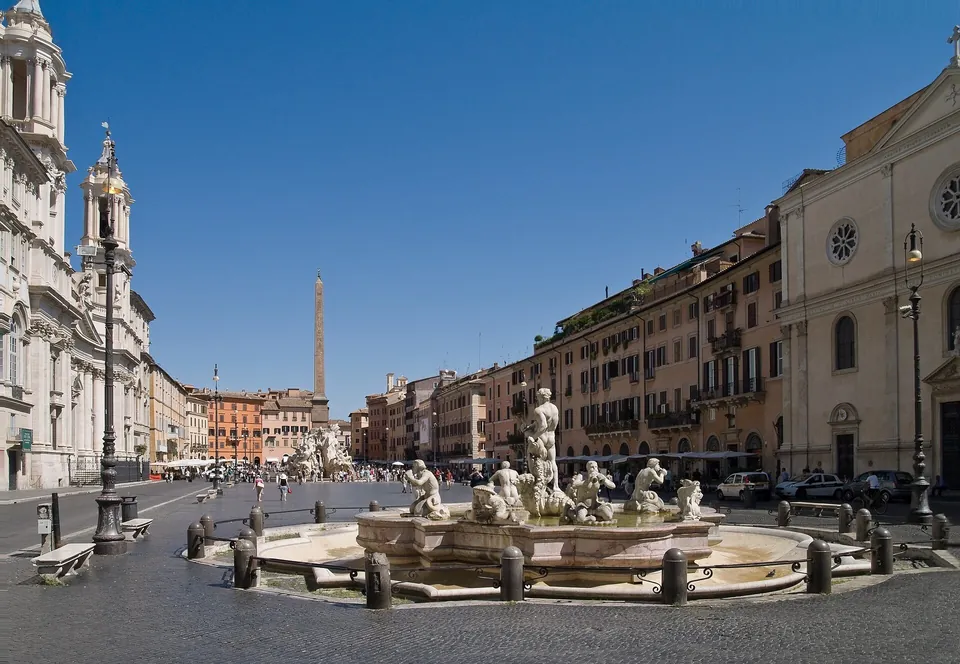
Piazza Navona
04

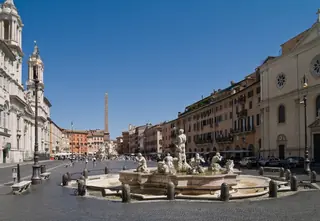
Piazza Navona

Selected because the Stadium of Domitian, Bernini and Borromini’s Baroque spectacle, and today’s crowds reveal Rome’s enduring appetite for public performance.

~20 min here·5 chapters
The Roman Stadium Buried Beneath Your Feet

Piazza Navona's distinctive elongated shape is not an accident of urban planning — it is the direct footprint of a Roman athletic stadium built around 80 AD.

How a Pope Turned a Square into a Stage

In the mid-17th century, Pope Innocent X transformed Piazza Navona into a dynastic showpiece for his Pamphilj family, commissioning a palace, a church, and Rome's most theatrical fountain.

Bernini's Fountain and the Rival Who Didn't Curse It

Bernini designed the Fountain of the Four Rivers — the square's dramatic centerpiece — after recovering from a professional setback, and the famous legend of him mocking Borromini's church is chronologically impossible.

🔓
Unlock 2 more chapters in the app
Get the app
Campo de' Fiori
05

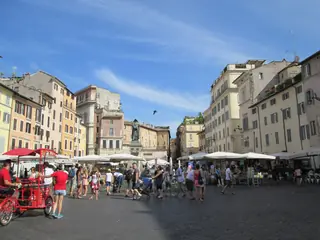
Campo de' Fiori

Selected for the charged contrast between market stalls and nightlife, Giordano Bruno’s execution site, and the long tension between ordinary pleasure and…

~15 min here·5 chapters
The Square That Never Got Dressed Up

Campo de' Fiori is unique among Rome's major piazzas — it was never given a formal architectural design, and that rawness is part of its identity.

The Borgia Connection Hidden in Plain Sight

Vannozza dei Cattanei — the long-term partner of the man who became Pope Alexander VI — owned Campo de' Fiori's most famous inn, and her family arms still mark the building.

What Happened Here on February 17, 1600

Giordano Bruno — philosopher, former Dominican friar, and intellectual wanderer — was burned alive in this square after refusing to recant before the Roman Inquisition.

🔓
Unlock 2 more chapters in the app
Get the app
Ponte Sisto
06

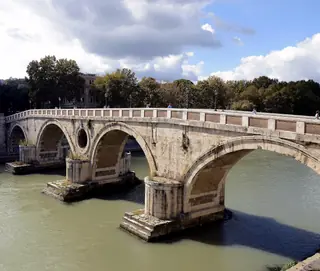
Ponte Sisto

Selected as the essential crossing where the Tiber, Jubilee pilgrims, and papal infrastructure carry the story from monumental central Rome into intimate…

~5 min here·2 chapters
What the Tiber Did to Every Bridge Before This One

Ponte Sisto stands where ancient Rome's Pons Aurelius once crossed — a crossing that was damaged and lost long before the Renaissance rebuilt it here.

The Engineering Hidden in Plain Sight

The occhialone — a circular opening in the central pier — is a flood-management feature, and five papal coats of arms mark Sixtus IV's personal claim over the bridge's legacy.

Piazza Trilussa
07

Piazza Trilussa

Selected as the finale where Trilussa’s Romanesco wit, modern aperitivo, students, and local street life show that Rome’s piazzas remain lived-in social stages.

~15 min here·2 chapters
The Poet Who Spoke Rome's Language

Trilussa was a sharp-tongued Roman dialect poet whose statue now presides over the piazza named after him — a fitting match between a man and a place.

The Fountain That Was Moved, Not Lost

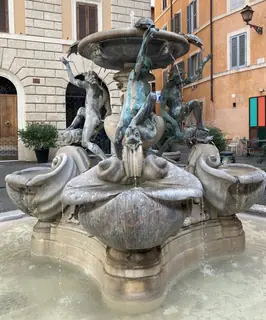
The fountain in this piazza is a reassembled fragment of a 1613 papal water system — its displacement and reconstruction record how the Tiber embankment works physically remade the riverside city.

FAQ

How long does this route take?

The audio narration is 48:41 in total. If you pause to look around and take photos, budget 2 hrs. You can pause and resume any time — including the next day.

Is the tour narrated in my language?

This version is narrated in English by rrawi. Other language versions may be available — check the language switcher on this page.

Can I listen without an internet connection?

Yes. This self-guided audio tour works fully offline — download it in the rrawi app before you set off, and GPS automatically triggers the next chapter as you walk. No signal needed.

Do I have to start from the first stop?

No — you can start or jump to any stop in the app. The route works in order, but each stop stands on its own if you need to skip.

What does the free part include?

Different tours offer different free preview chapters depending on the content. Download the rrawi app and subscribe to a City Pass to unlock all 29 chapters and experience the full route.

Ready to walk Rome?

Download rrawi and let rrawi walk with you.

Walk with the app
First chapter at each stop is free
Get the app