HomeRomeHow Rome Turned Power into Stone
How Rome Turned Power into Stone
Rome · Walking Tour

How Rome Turned Power into Stone

5 hrsWalk
0.8 kmDistance
15Stops
38Chapters

About this route

Imagine a city repeatedly remaking the same question—who truly rules Rome—as the Colosseum converts Nero’s private lake into public spectacle, the Arch of Constantine borrows earlier emperors’ authority, the Forum preserves republican institutions beneath imperial power, and Domitian’s private stadium ends with the dagger Stephanus concealed beneath his bandages on September 18, 96 AD.

🎧 Narrated audio tour⬇️ Works offline🌐 English📍 15 stops
Narrated by
rrawi
English

Stops on the route

15 stops · 38 chapters
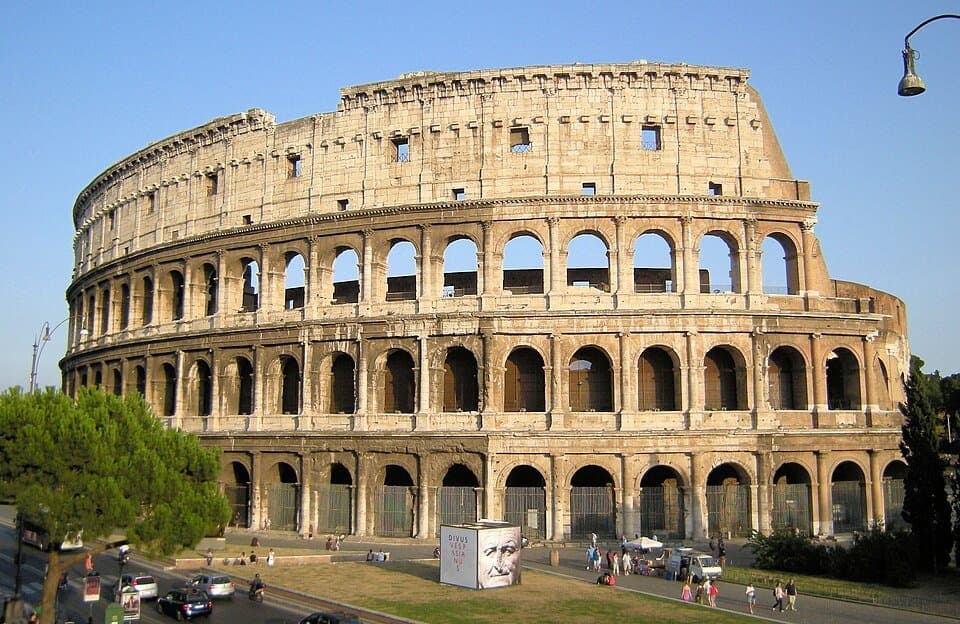
Colosseum
01

Colosseum

Selected as the clearest expression of imperial spectacle, where entertainment, generosity, conquest, and Rome’s social hierarchy were physically arranged…

~1 hrs here·5 chapters
The Puzzle in the Pockmarked WallsFree chapter

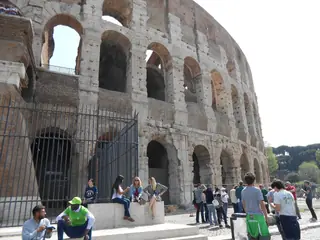
The Colosseum's scarred exterior reveals a medieval stripping of 300 tons of iron clamps — and the building's very location answers a deeper political question about who Rome belonged to.

0:000:00
How a Tax on Urine Built an Empire's Greatest ArenaFree chapter

The Colosseum was funded partly by spoils from the Jewish War and built by a man whose rise to power was anything but aristocratic — Vespasian was a pragmatic outsider who rebuilt Rome's finances by any means necessary.

0:000:00
One Hundred Days That Defined an Emperor

Titus inaugurated the Colosseum with 100 consecutive days of games — a deliberate political performance designed to cement Flavian legitimacy with the Roman public.
🔓
Unlock 2 more chapters in the app
Get the app
Arch of Constantine
02

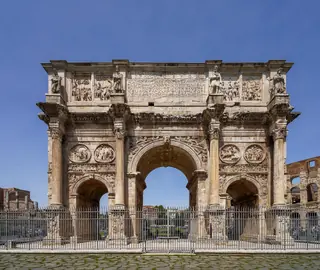
Arch of Constantine

Selected to reveal how Constantine transformed victory over Maxentius, religious ambiguity, and reused imperial sculpture into a compelling claim to legitimacy.

~10 min here·5 chapters
The Arch That Doesn't Quite Match Itself

The Arch of Constantine is built from sculpture taken from three different earlier emperors, creating a monument that is visually inconsistent — and that inconsistency is the key to understanding it.

The Battle That Changed Everything

Constantine defeated his rival Maxentius at the Battle of Milvian Bridge in 312 AD, a victory that made him master of the Western Roman Empire and set Rome on a new religious course.

The Vision Before the Battle

Before the battle, Constantine reportedly experienced a vision or dream that pointed him toward Christianity — an episode that became foundational to how later generations understood his reign, though the two earliest surviving accounts differ significantly in their details.

🔓
Unlock 2 more chapters in the app
Get the app
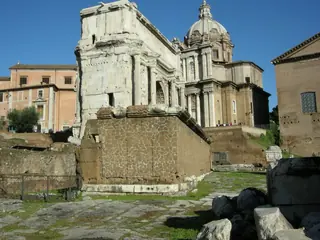
Roman Forum-Palatine Archaeological Area
03

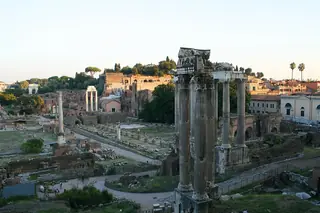
Roman Forum-Palatine Archaeological Area

Selected as the shared entry to the Forum and Palatine, allowing the Curia Julia, Basilica Julia, imperial residences, and other connected monuments to be…

~3 hrs here·2 chapters
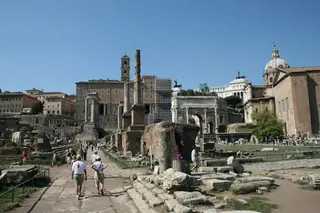
What This Valley Looked Like Before Rome

The Roman Forum began as a low, marshy valley between two hills, and the Palatine above it shows human habitation stretching back to the 10th century BC — long before any emperor, any senate, or any republic existed.

From Marsh to the Center of the World

Over roughly a thousand years, the Forum valley was drained, paved, and built up into the civic, religious, and political core of Rome — a transformation that mirrors Rome's own rise from village to empire.

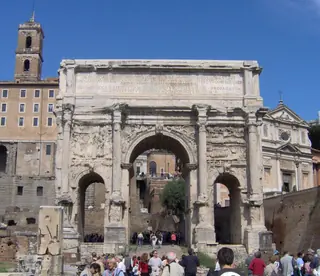
Arch of Septimius Severus
04

Arch of Septimius Severus

Inside Roman Forum

Essential for showing how military propaganda and the attempted erasure of Geta left a political crime visibly embedded in stone.

~15 min here·1 chapters
Septimius Severus and His Parthian Wars

The Arch of Septimius Severus was built in 203 AD to celebrate military victories over Parthia, and its physical design — one large central arch flanked by two smaller passages, framed by four Corinthian columns — was a deliberate statement of imperial power and dynastic ambition.

Basilica Julia
05

Basilica Julia

Inside Roman Forum

Essential for experiencing the Forum as a working civic center where courts, commerce, politics, and ordinary waiting shared one immense hall.

~15 min here·1 chapters
The Game Boards Cut Into the Marble

The Basilica Julia's scratched game boards reveal it as a genuinely busy, lived-in public space — not a ceremonial monument.

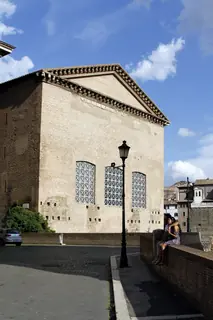
Curia Julia
06

Curia Julia

Inside Roman Forum

Essential for understanding how the Senate’s republican setting survived even as Augustus concentrated effective power around the emperor.

~20 min here·2 chapters
What Those Three Steps Actually Meant

The Curia Julia's interior layout — three broad steps running the length of the hall on each side — physically encoded the Senate's role: 300 men, ranked and seated, deliberating the fate of an empire.

Fire, Diocletian, and a Building That Refused to Die

A fire in 283 AD destroyed the Senate house; Emperor Diocletian rebuilt it, giving the Curia Julia the marble floor and wall decoration visible today — and its conversion into a church seven centuries later is what ultimately preserved it.

Rostra
07

Rostra

Inside Roman Forum

Essential for encountering Roman politics beyond the Senate chamber, where elections, persuasion, popular crowds, and political terror were staged in public.

~10 min here·2 chapters
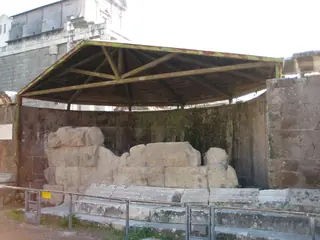
Rome's Original Speaker's Corner

The Rostra was Rome's premier platform for public oratory, and its name literally comes from the bronze ship rams mounted on its facade — war trophies turned into political furniture.

When the Platform Became a Stage for Terror

After Cicero's murder in 43 BC, Mark Antony displayed his severed head and hands on the Rostra — turning Rome's greatest speaking platform into a public warning about the cost of political opposition.

Via Sacra
08

Via Sacra

Inside Roman Forum

Essential as the route where triumphs converted conquest, captives, and plunder into political theater at the center of Rome.

~20 min here·2 chapters
The General Who Walked This Road

The Via Sacra was Rome's most sacred street — the route of the Roman triumph — and a victorious general's procession along it was the single greatest honor the Republic or Empire could grant a man.

What a Triumph Actually Said About Power

The Roman triumph was a tightly regulated political ritual designed to communicate imperial generosity and dominance — conquest was not just fought abroad, it was performed in the Forum for every Roman citizen to witness.

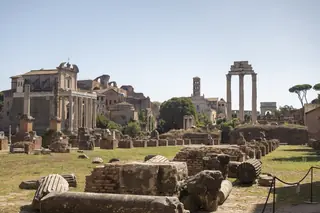
Temple of Saturn
09

Temple of Saturn

Inside Roman Forum

Essential as the tour’s Forum synthesis, joining an ancient cult, the state treasury, senatorial authority, and the institutions that financed Roman power.

~10 min here·3 chapters
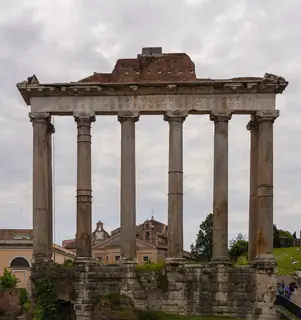
The Building That Outlived Every Empire

The Temple of Saturn is one of Rome's oldest sacred sites, rebuilt multiple times over nearly a thousand years, and its surviving columns and inscription reveal that layered history directly.

Rome's Vault: The Treasury Inside the Temple

The Temple of Saturn housed the Aerarium, Rome's state treasury, placing public wealth under both civic and divine protection — a combination that tells you everything about how Rome understood the relationship between government and religion.

Reading the Whole Forum From One Spot

Standing at the Temple of Saturn, visitors can see the entire system of Roman civic life laid out before them — the Forum as a working downtown where law, religion, politics, finance, and imperial power all occupied the same space.

Temple of Vesta
10

Temple of Vesta

Inside Roman Forum

Essential for understanding the Vestal Virgins, the eternal flame, and the Roman conviction that state survival depended on correctly managed relations with…

~15 min here·1 chapters
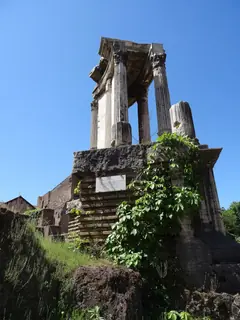
What Stood Here Before the Marble

The Temple of Vesta has ancient roots stretching back to Rome's earliest days, and the circular form you see now is a late restoration — the building has been rebuilt multiple times over more than a thousand years.

Temple of Divine Julius Caesar
11

Temple of Divine Julius Caesar

Inside Roman Forum

Essential for tracing how Caesar’s funeral and deification allowed Augustus to claim divine descent while replacing republican government with imperial power.

~10 min here·1 chapters
Caesar's Death and What It Started

Caesar's assassination in 44 BC and the public outrage at his cremation site set the political conditions that made his deification — and this temple — possible.

House of Augustus
12

House of Augustus

Inside Palatine Hill

Essential for contrasting Augustus’s carefully modest image as princeps with the extraordinary political and sacred authority concentrated around his Palatine…

~30 min here·1 chapters
What Augustus's Walls Reveal About Power

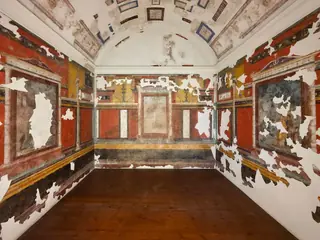
The House of Augustus uses Second Style painted architecture — illusionistic columns, stage facades, and false depth — to dissolve its walls visually, which mirrors the man himself: a ruler who performed modesty while holding total control.

Domus Flavia
13

Domus Flavia

Inside Palatine Hill

Essential for seeing how Domitian turned the Palatine into a monumental center of audiences, administration, banquets, and monarchical ceremony.

~25 min here·2 chapters
Domitian and the Architecture of Absolute Power

Domitian built the Domus Flavia not just as a residence but as a machine for projecting imperial authority — every room engineered to make visitors feel the weight of the emperor's supremacy.

What the Ruins Still Tell You

The physical remains of the Domus Flavia — the octagonal fountain, the marble fragments, the banquet hall — reveal a palace designed to dazzle and disorient visitors with scale and luxury.

Basilica of Maxentius and Constantine
14

Basilica of Maxentius and Constantine

Inside Roman Forum

Essential for connecting imperial rivalry and Roman vault engineering with the civic basilica form later adopted by Christian churches.

~15 min here·6 chapters
What Stood Here Before the Basilica

The basilica was built on top of existing imperial spice warehouses, on a raised platform at the eastern edge of the Forum, showing how Rome constantly repurposed its own urban fabric.

Maxentius and the Building He Needed

Maxentius began the basilica as part of a deliberate propaganda campaign to legitimize his rule, which was never recognized by his fellow emperors in the Tetrarchy.

The Engineering That Changed Western Architecture

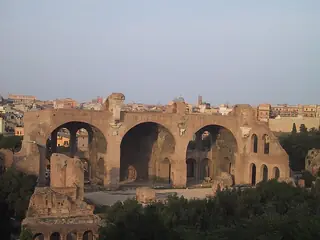
The basilica's vaulting system — groin vaults over the central nave and barrel vaults over the aisles — was a Roman engineering breakthrough that directly influenced the design of Christian churches for the next thousand years.

🔓
Unlock 3 more chapters in the app
Get the app
Palatine Stadium
15

Palatine Stadium

Inside Palatine Hill

Essential for contrasting Domitian’s secluded imperial garden with the mass entertainment of the Circus Maximus below.

~15 min here·4 chapters
A Garden Built for One, a Stadium for Thousands

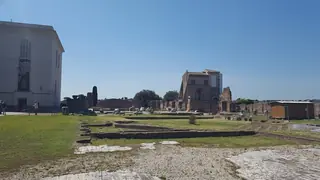
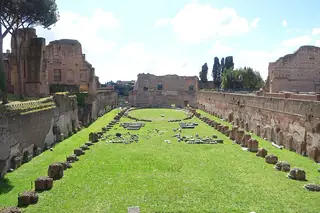
The Palatine Stadium was not a public arena — it was a private imperial garden, and its contrast with the Circus Maximus visible below captures the two very different worlds of Roman entertainment.

What Rabirius Built Into the Stone

The stadium's architecture — a two-story colonnade, a projecting semicircular exedra, and the sunken design itself — reflects the sophisticated spatial thinking of Domitian's chief architect, Rabirius.

The Paranoid Emperor and His Moonstone Walls

Domitian's obsessive fear of assassination — which shaped how he lived in this palace — was ultimately justified: he was killed in a palace conspiracy in 96 AD, despite every precaution.

🔓
Unlock 1 more chapters in the app
Get the app

FAQ

How long does this route take?

The audio narration is 83:30 in total. If you pause to look around and take photos, budget 5 hrs. You can pause and resume any time — including the next day.

Is the tour narrated in my language?

This version is narrated in English by rrawi. Other language versions may be available — check the language switcher on this page.

Can I listen without an internet connection?

Yes. This self-guided audio tour works fully offline — download it in the rrawi app before you set off, and GPS automatically triggers the next chapter as you walk. No signal needed.

Do I have to start from the first stop?

No — you can start or jump to any stop in the app. The route works in order, but each stop stands on its own if you need to skip.

What does the free part include?

Different tours offer different free preview chapters depending on the content. Download the rrawi app and subscribe to a City Pass to unlock all 38 chapters and experience the full route.

Ready to walk Rome?

Download rrawi and let rrawi walk with you.

Walk with the app
First chapter at each stop is free
Get the app