HomeRomeHow Rome’s Power Came Apart
How Rome’s Power Came Apart
Rome · Walking Tour

How Rome’s Power Came Apart

5 hrsWalk
4.8 kmDistance
5Stops
22Chapters

About this route

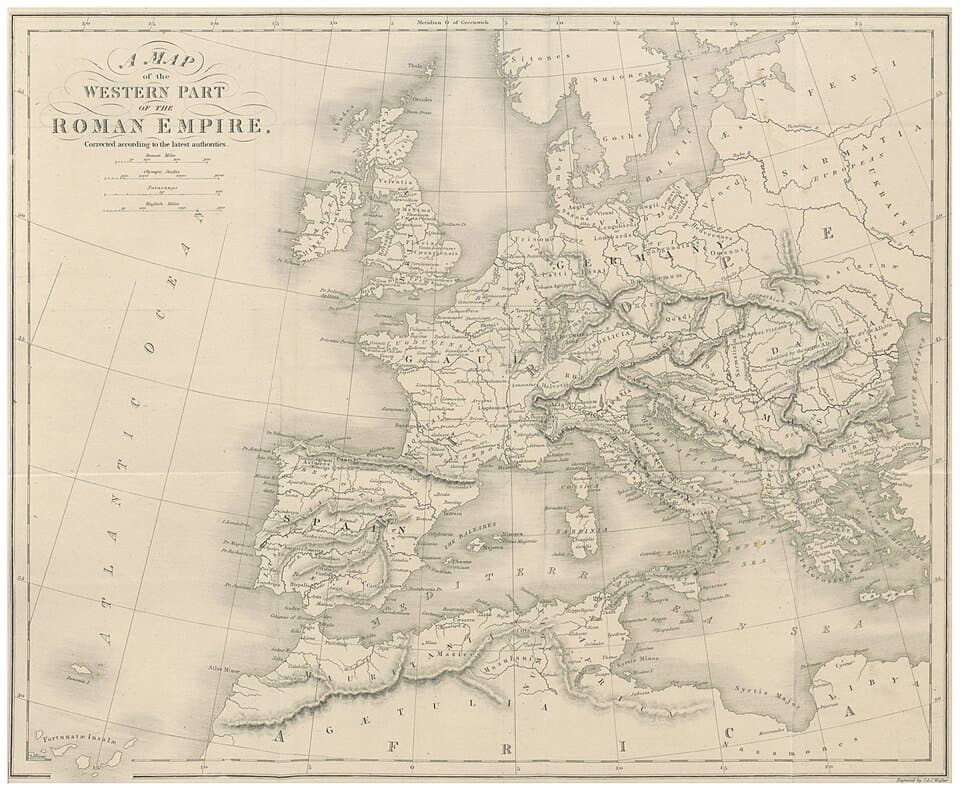
Imagine the capital of the world discovering that it could no longer protect or finance itself, from the emergency defenses preserved at the Museo delle Mura through the costly social bargains embodied by the Baths of Caracalla and Circus Maximus to the Arch of Constantine, where imperial power shifts toward Constantinople and an eastern empire that survives until 1453.

🎧 Narrated audio tour⬇️ Works offline🌐 English📍 5 stops
Narrated by
rrawi
English

Stops on the route

5 stops · 22 chapters
Museo delle Mura
01

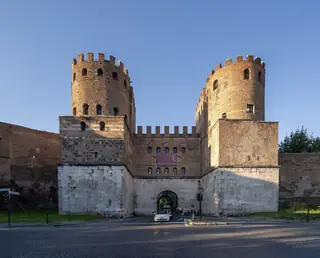
Museo delle Mura

The Museo delle Mura opens the story with Rome’s stark admission that distant frontiers no longer protected the capital and that survival now required the…

~45 min here·5 chapters
Two Romes, One WallFree chapter

The Aurelian Walls were built because Rome had shifted from trusting its frontiers to protect the capital to needing the capital to protect itself — a fundamental change in the empire's confidence.

0:000:00
Aurelian's Emergency BlueprintFree chapter

Emperor Aurelian — a disciplinarian general from the Balkans — ordered Rome's first new city walls in roughly six centuries, completing 19 kilometers of fortifications in about four to five years through a combination of urgency, engineering ingenuity, and sheer imperial will.

0:000:00
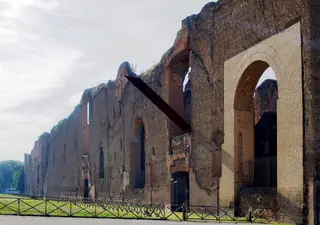
Walking the Wall That Aurelian Built

The 350-meter walkable section of the wall gives visitors a direct physical experience of the defensive logic — and reveals the different construction phases and medieval repairs layered into the structure over more than a millennium.
🔓
Unlock 2 more chapters in the app
Get the app
Baths of Caracalla
02

Baths of Caracalla

The Baths of Caracalla place spectacular public generosity beside expanded citizenship, taxation, and military pay, revealing the increasingly costly bargains…

~2 hrs here·5 chapters
What Rome Looked Like at Its Peak

The Baths of Caracalla were one of the most ambitious public works projects in Roman history, and standing inside them today gives you a direct sense of the empire at the height of its confidence.

The Emperor Who Built This Place

Caracalla was a brutal soldier-emperor whose reign was defined by family murder and military obsession, making the public generosity of the baths a sharp contrast with his private violence.

The Citizenship Decree and Rome's Fiscal Strain

Caracalla's grant of citizenship to nearly all free inhabitants of the empire in 212 CE was a legal revolution — but it also expanded the tax base at a moment when military costs were rising sharply, and it signals the fiscal pressures that would deepen across the third century.

🔓
Unlock 2 more chapters in the app
Get the app
Circus Maximus
03

Circus Maximus

Circus Maximus shows how emperors converted mass entertainment into cohesion and legitimacy—and how that bargain became harder to finance during prolonged…

~20 min here·4 chapters
What the Valley of Murcia Looked Like at the Start

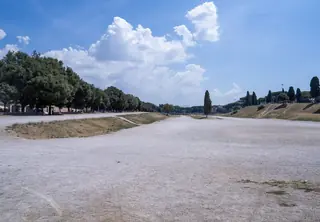
The Circus Maximus began as a natural gathering place in a valley between two hills, and its earliest wooden structure was credited to one of Rome's earliest kings.

Caesar's Expansion and the Shape of the Crowd

Julius Caesar rebuilt the Circus to its definitive footprint — 621 metres long, 118 metres wide — and the venue's capacity became a political instrument in itself.

How Factions Kept the City Loyal — or Divided

The chariot-racing factions — Blues, Greens, Reds, and Whites — were a powerful social institution that emperors used to manage public mood, but which could also become a source of dangerous tension.

🔓
Unlock 1 more chapters in the app
Get the app
Colosseum
04

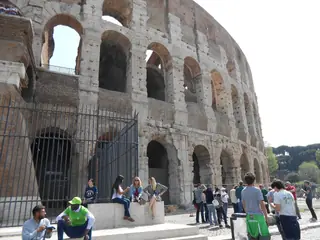
Colosseum

The Colosseum reveals Rome’s transformation through the gradual disappearance of gladiatorial combat under pressure from expense, changing tastes,…

~1 hrs here·5 chapters
The Pockmarked Walls and What They Hide

The Colosseum's scarred exterior is not decay — it's the fingerprint of deliberate medieval scavenging, revealing how the building was systematically stripped of 300 tons of iron clamps.

The Engineering Inside the Spectacle

The Colosseum's design solved a genuinely hard problem — moving 50,000 to 80,000 people in and out efficiently — through numbered arches, stacked architectural orders, and a hidden underground network.

One Hundred Days, Nine Thousand Animals

The inaugural games under Titus were a political investment as much as entertainment — a 100-day spectacle designed to buy legitimacy for a dynasty that had seized power through civil war.

🔓
Unlock 2 more chapters in the app
Get the app
Arch of Constantine
05

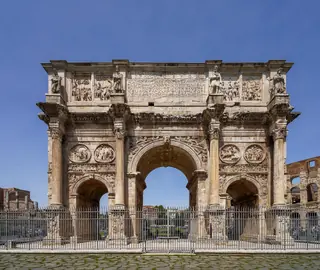
Arch of Constantine

The Arch of Constantine connects the Tetrarchy, civil war, reunification, and the eastward transfer of power that helped the Eastern Roman Empire outlive the…

~10 min here·3 chapters
The Arch That Borrows From Three Emperors

The Arch of Constantine was built in a deliberate hurry, reusing sculpture stripped from monuments to Trajan, Hadrian, and Marcus Aurelius — a practice called spolia — producing a monument that is visually a patchwork of Rome's greatest hits.

The Battle That Made Constantine Western Emperor

Constantine's victory over Maxentius at the Battle of the Milvian Bridge on October 28, 312 AD made him sole ruler of the western empire and set the stage for Christianity's transformation from tolerated sect to favored religion.

One Empire, Two Centers of Gravity

Constantine's founding of Constantinople in 330 AD shifted the empire's political weight permanently eastward — and the division that followed Theodosius I's death in 395 AD proved permanent, leaving Rome to decline while the eastern half survived for another millennium.

FAQ

How long does this route take?

The audio narration is 45:00 in total. If you pause to look around and take photos, budget 5 hrs. You can pause and resume any time — including the next day.

Is the tour narrated in my language?

This version is narrated in English by rrawi. Other language versions may be available — check the language switcher on this page.

Can I listen without an internet connection?

Yes. This self-guided audio tour works fully offline — download it in the rrawi app before you set off, and GPS automatically triggers the next chapter as you walk. No signal needed.

Do I have to start from the first stop?

No — you can start or jump to any stop in the app. The route works in order, but each stop stands on its own if you need to skip.

What does the free part include?

Different tours offer different free preview chapters depending on the content. Download the rrawi app and subscribe to a City Pass to unlock all 22 chapters and experience the full route.

Ready to walk Rome?

Download rrawi and let rrawi walk with you.

Walk with the app
First chapter at each stop is free
Get the app