Home › Luxor › Hatshepsut's Temple: Architecture of Divine Power
Hatshepsut's Temple: Architecture of Divine Power
Luxor · Walking Tour

Hatshepsut's Temple: Architecture of Divine Power

2 hrsWalk
0.0 kmDistance
6Stops
17Chapters

About this route

Imagine how one temple could turn movement into a claim of divine kingship, from the processional ramps through Punt's transported incense trees and the contrasting chapels of Hathor and Anubis to the moment Amun's sacred barque was set on its pedestal inside the cliff.

🎧 Narrated audio tour⬇️ Works offline🌐 English📍 6 stops
Narrated by
rrawi
English

Stops on the route

6 stops · 17 chapters
Mortuary Temple of Hatshepsut
01

Mortuary Temple of Hatshepsut

Hatshepsut's temple establishes the sacred and architectural framework that makes its terraces, reliefs, chapels, and central sanctuary one intelligible route.

~2 hrs here·3 chapters
What the Cliffs Told the ArchitectFree chapter

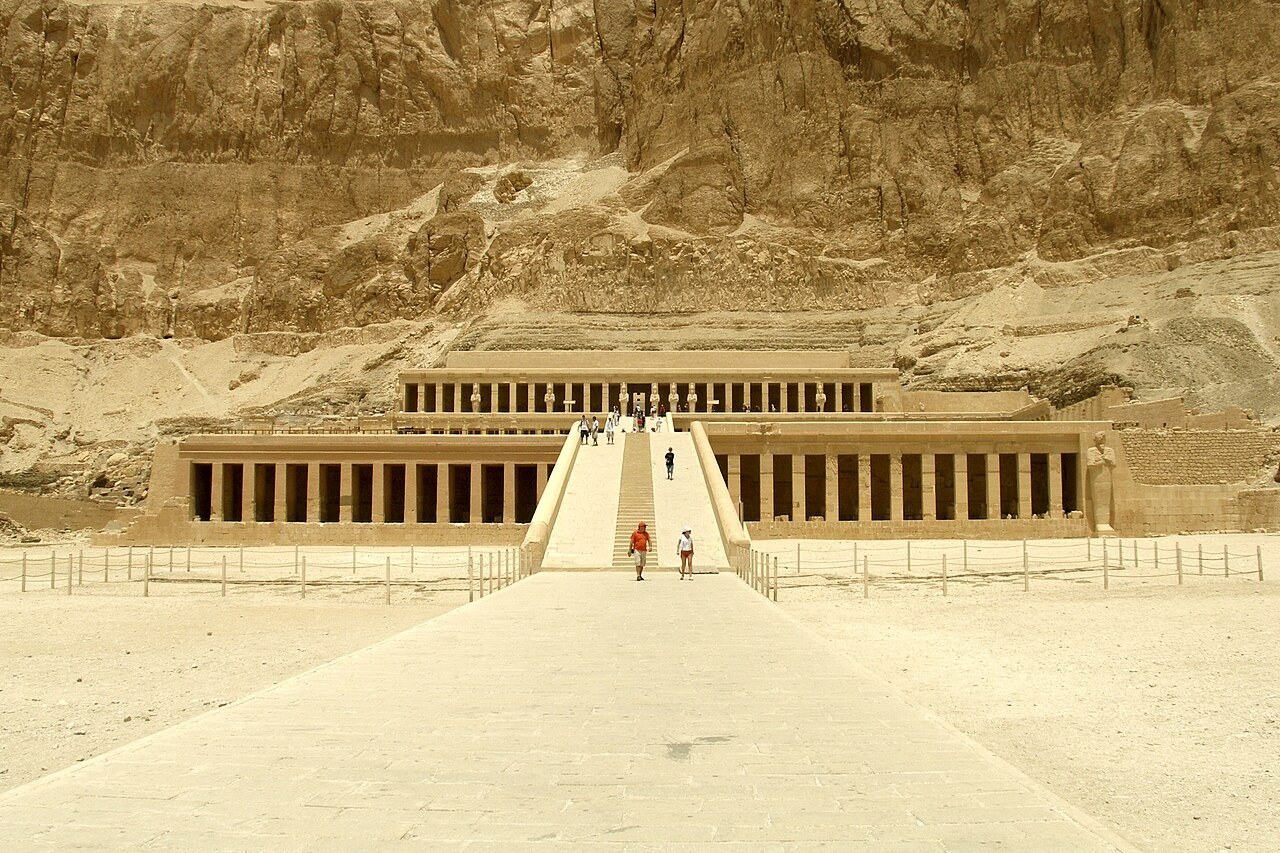
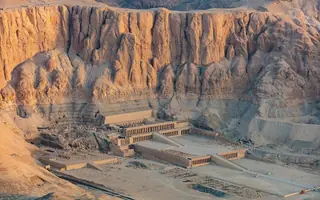
The temple's three-terrace design is a deliberate response to its setting at Deir el-Bahari, not an accident of style.

0:000:00
A Temple of Worship, Not a TombFree chapter

The temple was built for royal mortuary cult and the worship of multiple gods — Amun, Hathor, and Anubis — not as Hatshepsut's burial place.

0:000:00
The Face Hatshepsut Wore in Stone

The upper level's Osiride statues show Hatshepsut in mummiform royal form — a deliberate image of divine kingship, not a funerary mistake.
Terraces and Processional Ramps
02

Terraces and Processional Ramps

Essential as the temple's structural backbone, the terraces and ramps turn ceremonial movement toward the upper sacred spaces into visible architecture.

~15 min here·2 chapters
What the Cliff and Colonnades Are Telling You

The terraces sit directly beneath the Deir el-Bahari cliff, and their colonnaded fronts create a deliberate visual contrast with the raw rock face behind them.

How Three Terraces Organize a Sacred Journey

Three broad terrace courts, connected by ramps rather than stairs, structure the entire approach and make ritual movement through the temple physically legible.

Punt Expedition Reliefs
03

Punt Expedition Reliefs

Essential to the route, the Punt reliefs unite ships, a foreign landscape, and transported incense trees in a carefully staged account of royal and religious…

~15 min here·3 chapters
Where Does Punt Actually Appear on the Wall?

The Punt Expedition Reliefs are located in the middle southern portico of the temple's second terrace, and they depict an actual foreign journey — not a generic offering scene.

What the Carvers Actually Put on the Wall

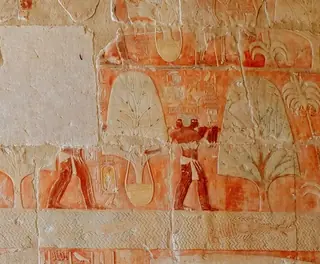
The reliefs show specific, detailed foreign landscape elements — plants, animals, dwellings, and people physically carrying incense trees — making this one of the most visually specific expedition narratives in ancient Egyptian art.

Royal Glory or Reliable Record — Which Is It?

The expedition narrative participates in royal and religious ideology, meaning it cannot be read as a neutral travel document — but that doesn't erase its specific foreign details, and Punt's location remains a genuine scholarly puzzle.

Chapel of Hathor
04

Chapel of Hathor

Essential to the route, the Chapel of Hathor changes the temple's visual language through goddess-faced capitals, a roofed vestibule, and an inner room cut…

~15 min here·3 chapters
What This Corner of the Middle Terrace Once Was

The Chapel of Hathor is a distinct, dedicated shrine on the southwest side of the middle terrace — not simply a decorative edge of the temple complex.

How to Read a Capital — The Goddess in Stone

The Hathor-headed capitals — a goddess face flanked by cow ears — are the architectural signature that identifies this as a Hathor shrine and distinguishes it from every other part of the temple.

From Open Vestibule to Rock-Cut Sanctuary

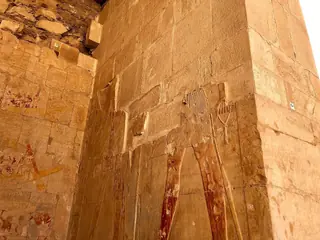
The shrine moves from a roofed vestibule — with architraves and ceiling plates documented by conservators — deeper into an inner room cut directly into the cliff, making the living rock itself part of the sacred space.

05

Chapel of Anubis

Essential to the route, the Chapel of Anubis reveals a distinct cult environment through twelve fluted columns, an astronomical ceiling, and painted offerings.

~15 min here·3 chapters
Where the Middle Terrace Meets the God of the Dead

The lower Chapel of Anubis sits on the middle terrace and is a distinct shrine — not the same as the separately named upper Anubis shrine higher up in the temple.

Twelve Fluted Columns and What They Signal

The lower chapel's hall is defined by twelve fluted columns — a treatment that visually sets it apart from the plainer supports elsewhere in the temple — and above them, an astronomical ceiling that gives the space its distinct ritual atmosphere.

The Offering Programme on the Walls

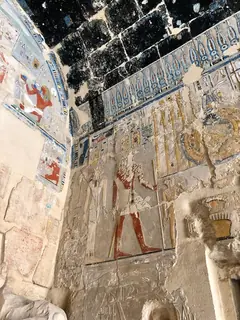
Wall paintings depicting offerings to Anubis and Sokaris give the lower chapel its specific ritual programme — distinct from the imagery in other chapels in the temple.

Sanctuary of Amun
06

Sanctuary of Amun

Essential as the route's religious destination, the Sanctuary of Amun reveals how the temple received the god's sacred barque inside its rock-cut halls.

~15 min here·3 chapters
Where the Open Sky Ends and the Rock Begins

The Sanctuary of Amun sits at the precise western end of the temple's central axis, where the open terraced architecture gives way to a passage cut directly into the living cliff — a spatial shift that is the defining architectural fact of this place.

The Barque, the Hall, and What the Walls Remember

The first space inside the sanctuary — the Bark Hall — was built to receive Amun's sacred barque carried from Karnak, and its side-wall reliefs document that ritual so precisely that the walls themselves serve as a record of what happened here.

The Royal Family's Place in the Divine Room

Niches cut into the sanctuary held statues of the royal family, placing Hatshepsut and her kin symbolically inside Amun's cult space — present at the rites even when no living person stood there.

FAQ

How long does this route take?

The audio narration is 26:12 in total. If you pause to look around and take photos, budget 2 hrs. You can pause and resume any time — including the next day.

Is the tour narrated in my language?

This version is narrated in English by rrawi. Other language versions may be available — check the language switcher on this page.

Can I listen without an internet connection?

Yes. This self-guided audio tour works fully offline — download it in the rrawi app before you set off, and GPS automatically triggers the next chapter as you walk. No signal needed.

Do I have to start from the first stop?

No — you can start or jump to any stop in the app. The route works in order, but each stop stands on its own if you need to skip.

What does the free part include?

Different tours offer different free preview chapters depending on the content. Download the rrawi app and purchase the tour to unlock all 17 chapters and experience the full route.

Ready to walk Luxor?

Download rrawi and let rrawi walk with you.

Walk with the app
First chapter at each stop is free
Get the app