Home › Luxor › Karnak: Pharaohs Writing in Sacred Stone
Karnak: Pharaohs Writing in Sacred Stone
Luxor · Walking Tour

Karnak: Pharaohs Writing in Sacred Stone

3 hrsWalk
0.0 kmDistance
8Stops
18Chapters

About this route

Imagine a sacred city that every pharaoh inherited but none could finish, from Amun’s ram-headed approach through the interrupted First Pylon and the light-filled Great Hypostyle Hall to the Akhmenu, where Thutmose III carved foreign plants and animals into its northeast walls.

🎧 Narrated audio tour⬇️ Works offline🌐 English📍 8 stops
Narrated by
rrawi
English

Stops on the route

8 stops · 18 chapters
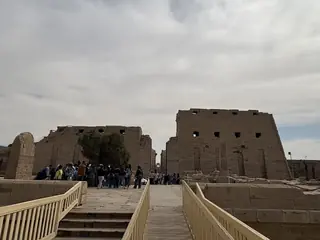
Karnak Temple Complex
01

Karnak Temple Complex

Selected as the essential orientation stop, Karnak establishes the precincts, intersecting axes, and centuries of royal building that make every later…

~3 hrs here·2 chapters
One God's City vs. Every Pharaoh's CanvasFree chapter

Karnak is not a single temple but a multi-precinct ritual landscape built by successive rulers over many centuries, each adding their own mark.

0:000:00
How Karnak Moves Through Space and RitualFree chapter

The complex is organized along two intersecting axes — east–west and north–south — creating a sequence of ritual thresholds, and it was physically connected to Luxor Temple by a sphinx-lined processional road.

0:000:00
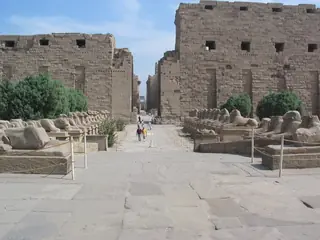
Avenue of Ram-Headed Sphinxes
02

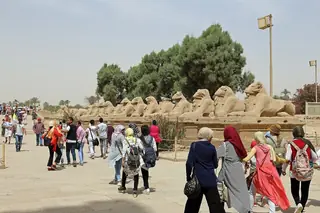
Avenue of Ram-Headed Sphinxes

Essential to the approach, its paired ram-headed guardians turn Amun’s identity and the movement of ritual processions into architecture.

~15 min here·2 chapters
Two Rows, Two Kinds of Guardian

The Karnak end of the processional road is flanked by ram-headed sphinxes arranged in two facing rows, and the ram is specifically the symbol of Amun.

One Road, More Than One Builder

The processional landscape at Karnak accumulated sculpture across different periods, and the ram-headed group here differs from the human-headed sphinxes found further along toward Luxor Temple.

First Pylon
03

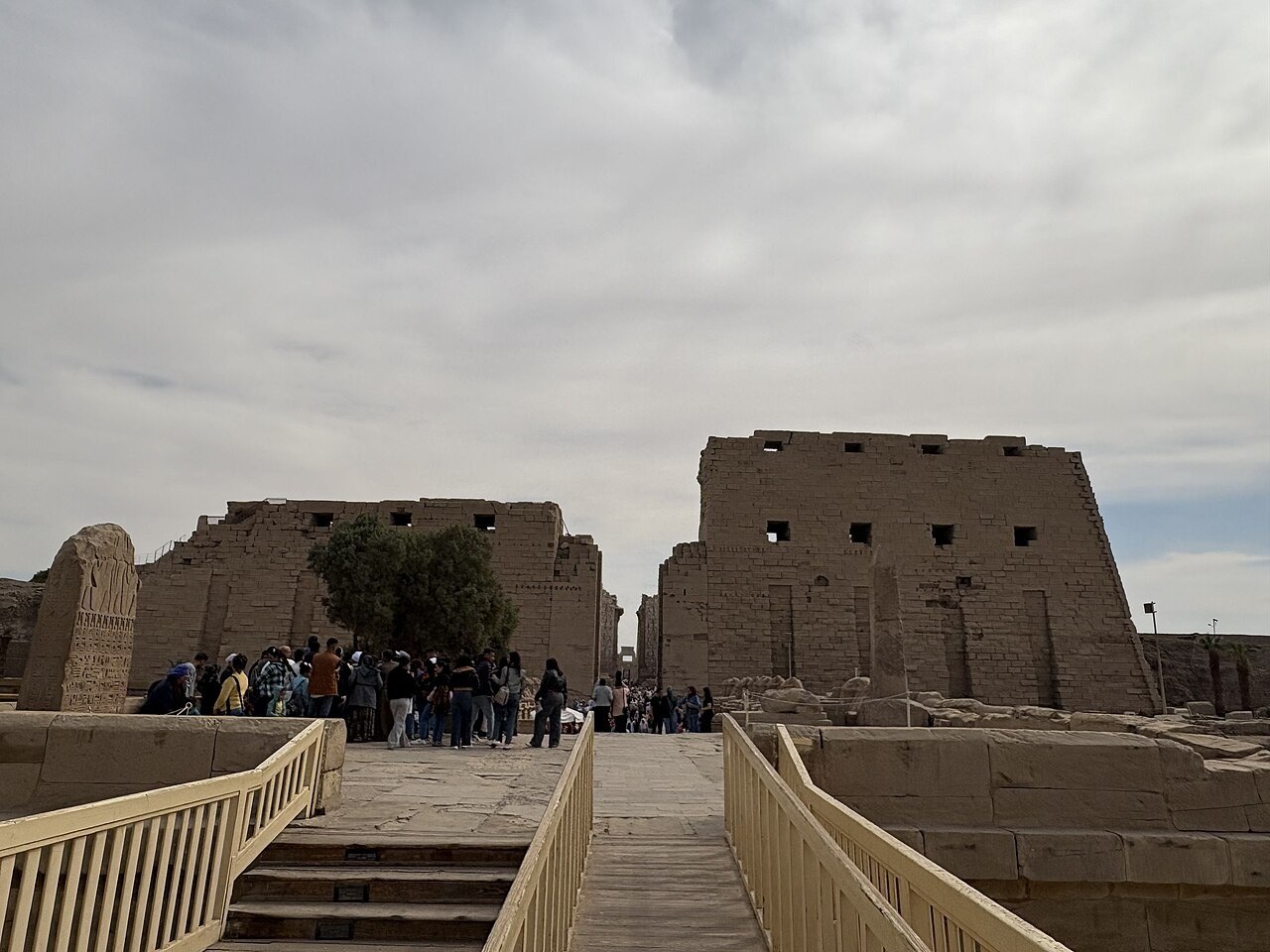
First Pylon

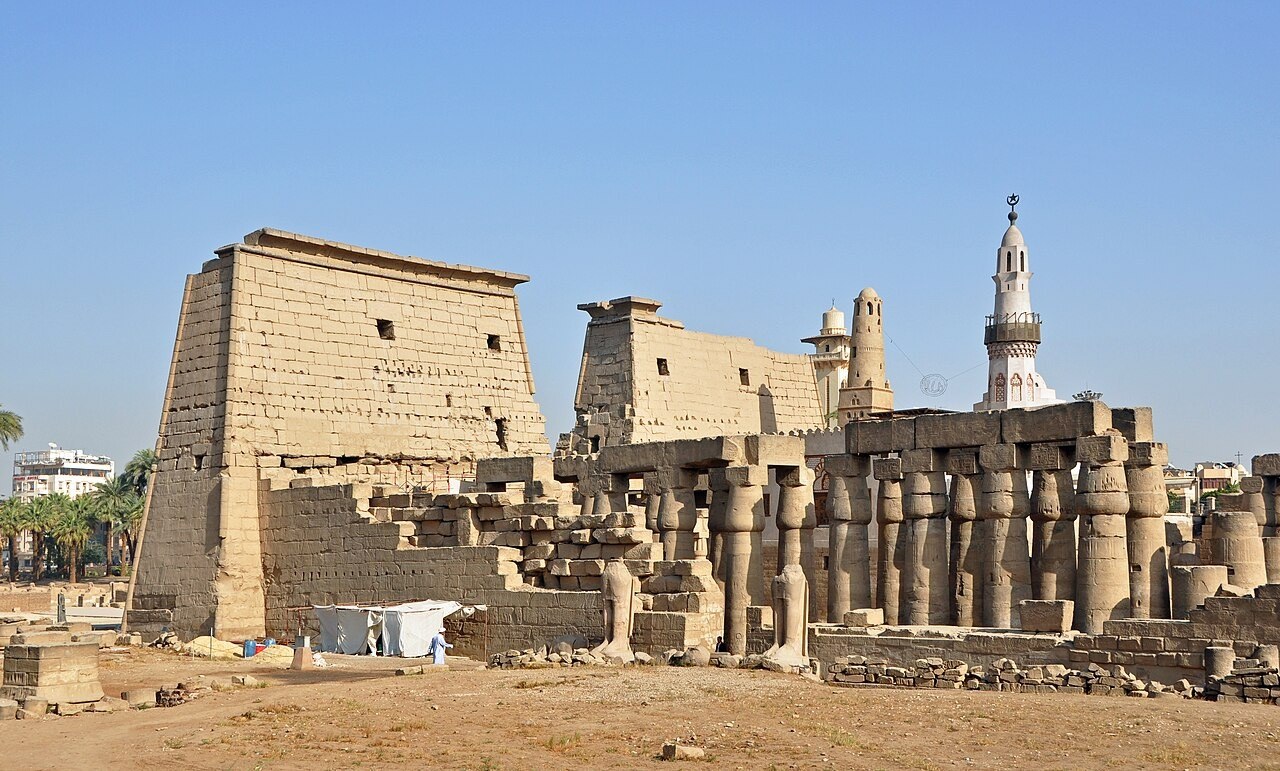
Essential for its unfinished towers and surviving mudbrick ramps, which expose an interrupted construction project rather than a timeless completed facade.

~15 min here·2 chapters
Why Does This Gateway Look Wrong?

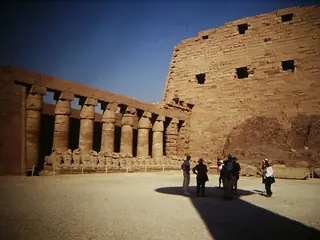
The First Pylon was never finished — its uneven, ragged upper profile is not damage or decay, but the frozen evidence of a construction project that simply stopped.

The Mudbrick Evidence Left Behind

Mudbrick construction ramps that workers used to haul stone upward still survive beside the pylon, making this one of the rare places where ancient Egyptian building technique is physically present rather than merely theorized.

Great Court
04

Great Court

Essential because its older shrines, festival role, and later alterations make successive royal building phases visible within a single court.

~15 min here·3 chapters
A Court That Doesn't Quite Add Up

The Great Court sits between the First and Second Pylons and contains older shrine structures that predate the enclosing court itself — a visible puzzle of layered building phases.

Who Built This Court — and Why

The Great Court was established by Shoshenq I as a festival court for Amun, as confirmed by an inscription, and was later altered by Nectanebo I who added a new gateway.

What the Columns Along the Sides Tell You

Papyrus-bud columns line the northern and southern sides of the court, their plant-shaped forms reflecting the religious symbolism of Amun's sacred landscape.

Great Hypostyle Hall
05

Great Hypostyle Hall

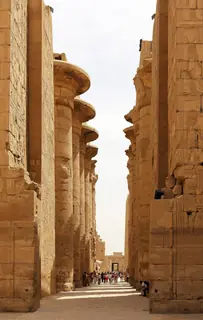
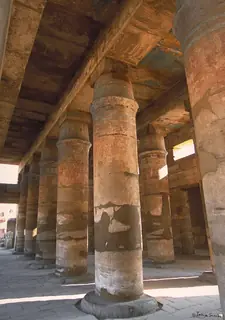
Essential for showing how 134 columns, clerestory light, papyrus forms, and contrasting relief techniques shaped a major ritual interior.

~15 min here·2 chapters
A Forest of Stone — How the Hall Works

The hall's 134 columns are divided into two distinct types — 12 taller open-papyrus columns at the center and 122 shorter closed-papyrus columns on the sides — and this height difference is the key to how the entire space is lit.

Two Pharaohs, Two Hands in Stone

Seti I and Ramesses II decorated the hall in two distinct techniques — raised relief in the north, sunk relief in the south — and the contrast is still readable on the walls today.

06

Obelisks of Thutmose I and Hatshepsut

Essential because the obelisks’ different positions and layered inscriptions preserve separate royal programmes within Amun’s sacred precinct.

~15 min here·2 chapters
Two Rulers, Two Building Programmes

The obelisks visitors see here belong to two separate royal commissions — Thutmose I and Hatshepsut — erected at different times and placed in different parts of the temple.

What the Inscriptions Actually Say — and When

The central text on Thutmose I's obelisk dedicates it to Amun, but later Ramesside rulers added their own inscriptions alongside the original — meaning a single shaft of stone can carry voices from multiple centuries.

Sacred Lake and Scarab
07

Sacred Lake and Scarab

Essential for distinguishing the lake’s priestly purification role from the relocated scarab’s solar imagery and separate history.

~15 min here·2 chapters
The Lake's Ritual Purpose and History

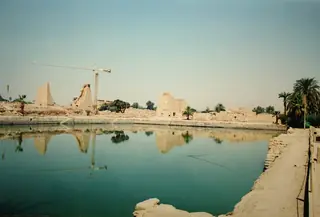
The rectangular sacred lake was a priestly purification space, with a lake at this site recorded as early as the reign of Thutmose III.

The Scarab's Origins and Solar Meaning

The red granite scarab on its plinth is not a lake monument — it depicts Amenhotep III offering to Khepri, the young sun god, and was originally installed at Amenhotep III's mortuary temple on the west bank.

Akhmenu Festival Hall of Thutmose III
08

Akhmenu Festival Hall of Thutmose III

Essential as the finale, the Akhmenu unites tent-pole columns, royal ancestor rites, and botanical reliefs into Thutmose III’s distinctive architectural…

~15 min here·3 chapters
Two Men, One Building, Different Worlds

Thutmose III built the Akhmenu starting in his twenty-third regnal year, positioning it east of the older temple core — and the columns inside announce immediately that this is not like anything else at Karnak.

The Hall Where Dead Kings Received Offerings

The ancestor cult room within the Akhmenu depicted royal predecessors receiving offerings, placing Thutmose III inside a lineage of legitimate rulers — a political and religious statement carved in stone.

What Grows on the Northeast Walls

The botanical relief room in the Akhmenu's northeast section records exotic plants and animals — wall representations of species Thutmose III encountered on campaign, completing a three-part ritual programme unique to this building.

FAQ

How long does this route take?

The audio narration is 33:11 in total. If you pause to look around and take photos, budget 3 hrs. You can pause and resume any time — including the next day.

Is the tour narrated in my language?

This version is narrated in English by rrawi. Other language versions may be available — check the language switcher on this page.

Can I listen without an internet connection?

Yes. This self-guided audio tour works fully offline — download it in the rrawi app before you set off, and GPS automatically triggers the next chapter as you walk. No signal needed.

Do I have to start from the first stop?

No — you can start or jump to any stop in the app. The route works in order, but each stop stands on its own if you need to skip.

What does the free part include?

Different tours offer different free preview chapters depending on the content. Download the rrawi app and purchase the tour to unlock all 18 chapters and experience the full route.

Ready to walk Luxor?

Download rrawi and let rrawi walk with you.

Walk with the app
First chapter at each stop is free
Get the app