Home › Luxor › Luxor Temple: Sacred Spaces Reclaimed
Luxor Temple: Sacred Spaces Reclaimed
Luxor · Walking Tour

Luxor Temple: Sacred Spaces Reclaimed

2 hrsWalk
0.0 kmDistance
8Stops
20Chapters

About this route

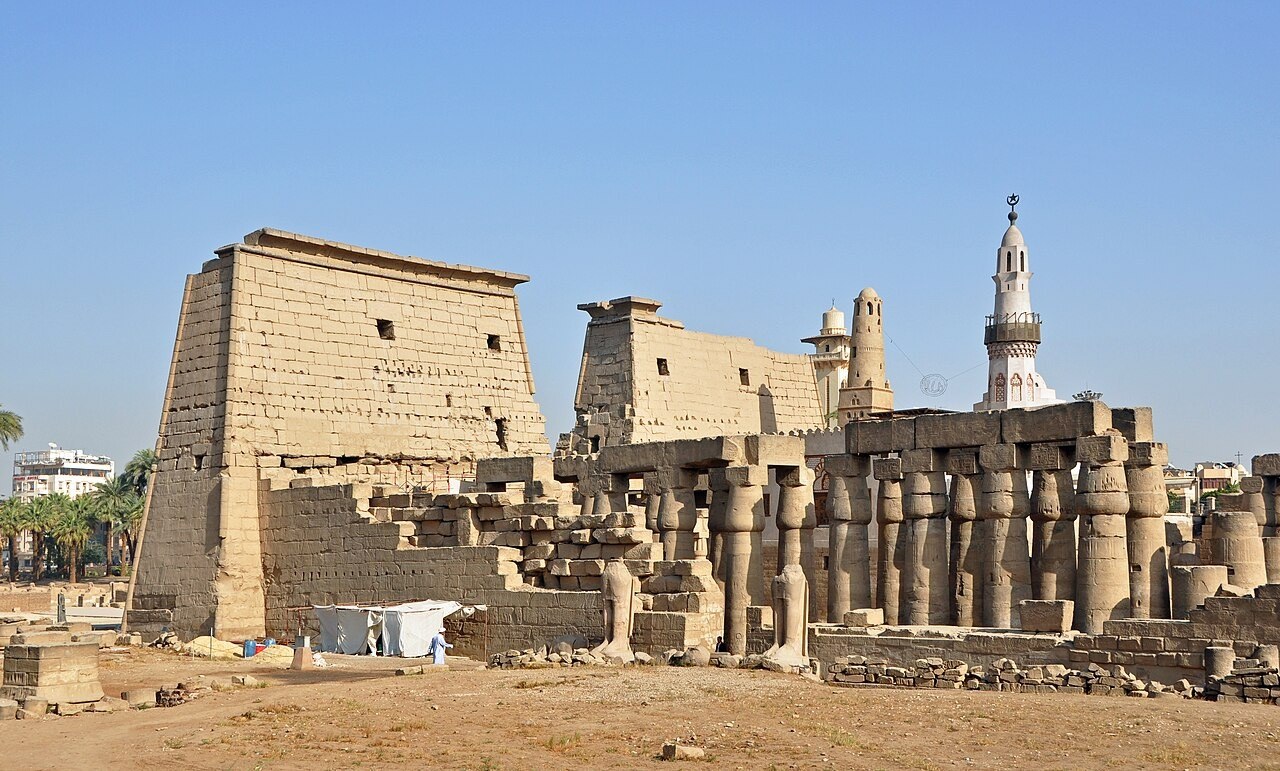
Imagine a temple that keeps changing rulers and religions without ceasing to be sacred, from the human-headed sphinx avenue through Ramesses II's layered court and the living Mosque of Abu al-Haggag to the Roman chamber where Diocletian and his three co-rulers were painted over Egyptian reliefs.

🎧 Narrated audio tour⬇️ Works offline🌐 English📍 8 stops
Narrated by
rrawi
English

Stops on the route

8 stops · 20 chapters
Luxor Temple Complex
01

Luxor Temple Complex

Selected as the essential orientation stop, the complex reveals how the Opet route, Amenhotep III's core, and later additions fit into one evolving sacred plan.

~2 hrs here·3 chapters
Two Temples, One Sacred AxisFree chapter

Luxor Temple was built as the southern counterpart to Karnak, and the processional axis between them defined the temple's entire purpose.

0:000:00
The Older Core and the Pharaoh Who Expanded ItFree chapter

The main surviving core of Luxor Temple was built by Amenhotep III, and Ramesses II later added the large northern court and pylon — they are distinct phases, not one unified build.

0:000:00
When Rome Painted Over the Gods

Centuries after the pharaohs, Roman occupiers converted part of the temple into an imperial cult chamber, leaving painted wall decorations that survive layered over the original Egyptian stonework.
Avenue of Human-Headed Sphinxes
02

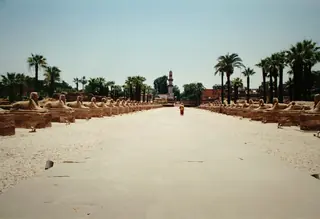
Avenue of Human-Headed Sphinxes

This essential avenue turns the Opet procession into a physical experience through disciplined rows of lion-bodied sphinxes bearing royal human heads.

~15 min here·2 chapters
The Pharaoh Who Lined the Road With His Own Face

The sphinxes at the Luxor end of the processional avenue carry royal human heads — not ram heads — and one source associates them with Nectanebo I, a pharaoh of the Late Period who was obsessed with projecting royal authority through monumental sculpture.

What This Road Was Actually For

The avenue's paired flanking rows of sphinxes were designed to organize and frame a sacred procession — specifically the Opet festival journey from Karnak to Luxor Temple — turning the approach into a choreographed ritual experience.

First Pylon Obelisk and Colossi
03

First Pylon Obelisk and Colossi

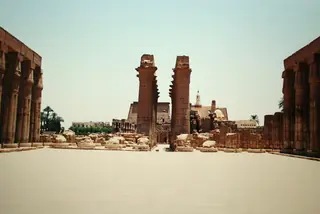
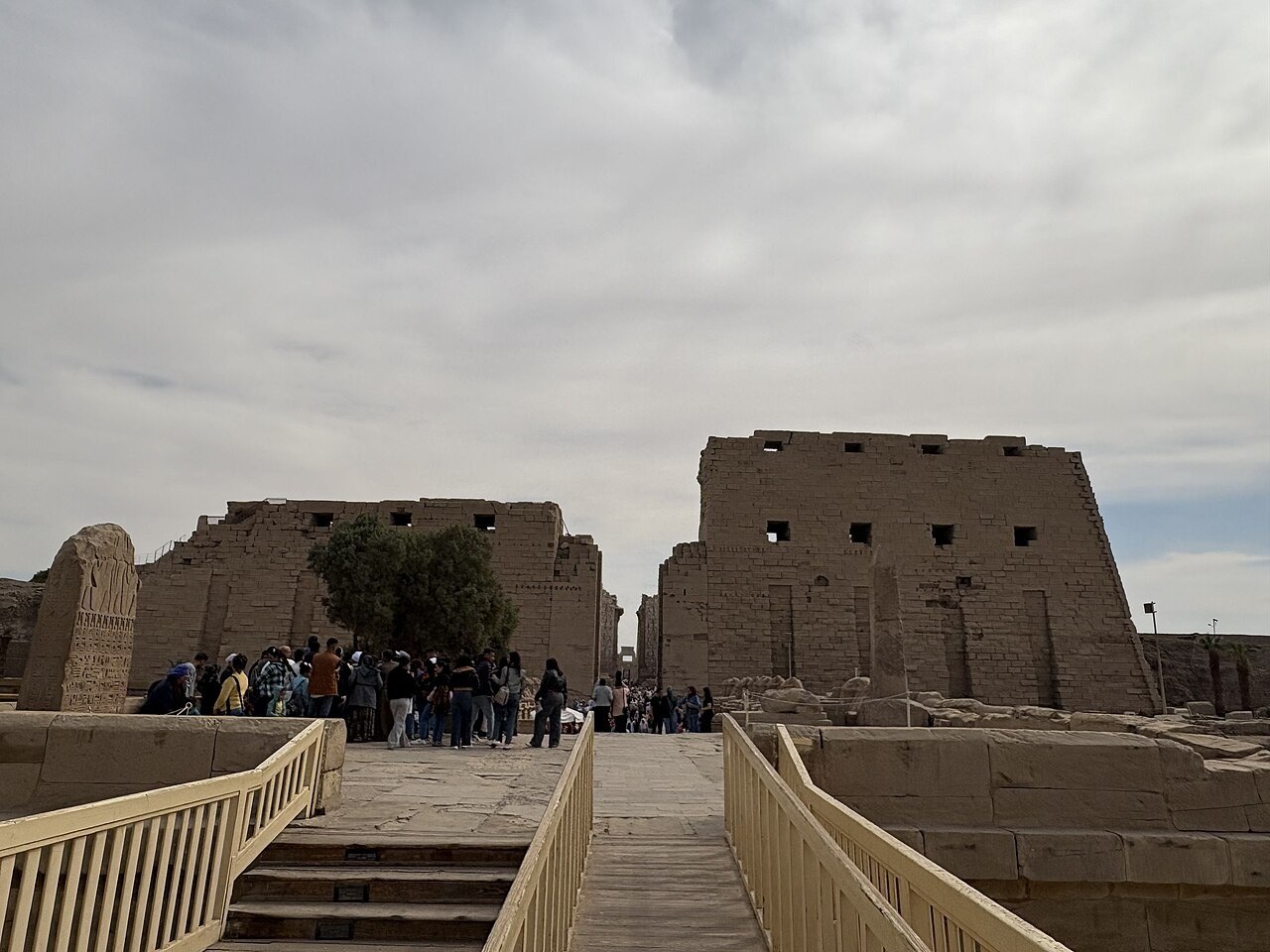
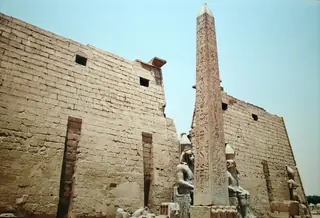
This essential entrance concentrates Ramesses II's royal imagery in the pylon, colossi, and an obelisk pair now divided between Luxor and Paris.

~15 min here·2 chapters
Ramesses II and the Art of Royal Self-Promotion

Ramesses II designed the First Pylon and its colossal statuary as a deliberate statement of royal power, fronting the northern court that bears his name.

One Obelisk Here, One in Paris

Originally a matched pair flanked the pylon; one obelisk remains at Luxor while the other has stood at the Place de la Concorde in Paris since 1836.

Court of Ramesses II
04

Court of Ramesses II

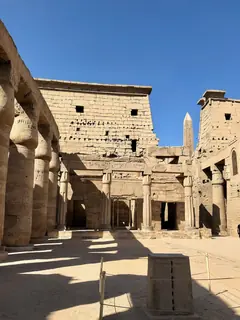
This essential court brings together Ramesses II's double colonnade and triple shrine with the elevated Islamic layer preserved in its northeast quarter.

~15 min here·3 chapters
Ramesses II Builds in Front of an Older Temple

The Court of Ramesses II is a later addition built in front of the already-ancient temple core of Amenhotep III, not the starting point of the complex.

What the Double Colonnade Actually Tells You

The court is wrapped in a double papyrus-bud colonnade — two rows of columns, not one — and contains a triple shrine in its northwest corner, both of which are still readable today.

How a Mosque Settled Into a Pharaoh's Court

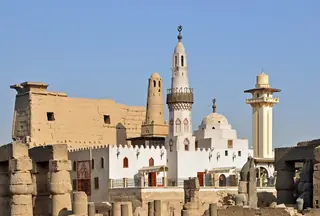
The Abu al-Haggag mosque occupies the northeast quarter of the court at a noticeably higher floor level, preserving the ancient ground level that existed before modern excavation lowered the rest.

Mosque of Abu al-Haggag
05

Mosque of Abu al-Haggag

This essential living mosque makes Luxor Temple's Islamic continuity visible through its elevated level, reused ancient stone, medieval origins, and…

~15 min here·3 chapters
Two Cities Stacked on the Same Ground

The mosque sits at a visibly higher level than the ancient court below it, because centuries of accumulated settlement raised the ground — and that elevation gap is something you can see right now from the temple court.

The Mosque's Own Centuries of Change

The mosque has its own layered building history — medieval origins, major nineteenth-century renewal, and two minarets from different phases — making it a monument in its own right, not simply an intrusion on the temple.

A Saint, a Tomb, and a Living Community

The mosque is named for Abu al-Haggag, a revered local saint whose tomb it contains — making it an active center of Muslim community life in Luxor, not an archaeological exhibit.

Colonnade of Amenhotep III
06

Colonnade of Amenhotep III

This essential colonnade distinguishes Amenhotep III's fourteen-column architecture from the Opet reliefs completed under Tutankhamun and Horemheb.

~15 min here·2 chapters
The Man Who Raised the Columns

Amenhotep III built the colonnade's fourteen columns in two paired rows of seven, creating a long processional passage — but he left the walls bare.

Who Actually Painted the Festival

Tutankhamun and Horemheb completed the Opet procession scenes on the colonnade walls after Amenhotep III's building work — the walls you see belong to a different generation than the columns above them.

Court of Amenhotep III
07

Court of Amenhotep III

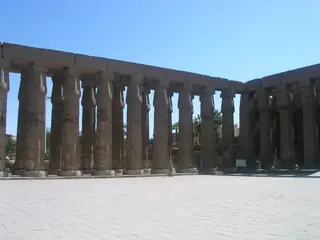
This essential court lets visitors feel the deliberate release from a compressed colonnade into the open-air heart of Amenhotep III's earlier temple core.

~15 min here·2 chapters
Why the Space Suddenly Opens Up

The shift from the colonnade's enclosed passage to this open court is a deliberate architectural transition — and it belongs to an older, earlier layer of the temple than what visitors passed through before.

How Columns Define an Open Space

The court's perimeter of columns frames the open sky without enclosing it — a spatial grammar that marks the threshold between the processional route and the inner sanctuary beyond.

08

Roman Imperial Cult Chamber and Inner Sanctuary

This essential inner stop exposes the Roman transformation directly, with lime-plaster imperial murals surviving over earlier Egyptian reliefs.

~15 min here·3 chapters
What Romans Did to an Egyptian Temple Room

A room deep inside Luxor Temple was converted in the late third century CE into a Roman imperial cult chamber, with lime-plaster murals painted directly over the older Egyptian stone reliefs beneath.

Four Emperors on a Temple Wall

The Roman painting programme depicted Diocletian and his three co-rulers of the Tetrarchy, turning the chamber into an imperial cult shrine where the Roman state religion was performed inside Egyptian sacred architecture.

Two Sacred Spaces, Not One

The Roman-converted chamber is a distinct space from the temple's deeper inner sanctuary — two separate rooms with separate religious histories, not a single unified space.

FAQ

How long does this route take?

The audio narration is 33:30 in total. If you pause to look around and take photos, budget 2 hrs. You can pause and resume any time — including the next day.

Is the tour narrated in my language?

This version is narrated in English by rrawi. Other language versions may be available — check the language switcher on this page.

Can I listen without an internet connection?

Yes. This self-guided audio tour works fully offline — download it in the rrawi app before you set off, and GPS automatically triggers the next chapter as you walk. No signal needed.

Do I have to start from the first stop?

No — you can start or jump to any stop in the app. The route works in order, but each stop stands on its own if you need to skip.

What does the free part include?

Different tours offer different free preview chapters depending on the content. Download the rrawi app and purchase the tour to unlock all 20 chapters and experience the full route.

Ready to walk Luxor?

Download rrawi and let rrawi walk with you.

Walk with the app
First chapter at each stop is free
Get the app