Home › Milan › Milan: Power Written in Public Space
Milan: Power Written in Public Space
Milan · Walking Tour

Milan: Power Written in Public Space

2 hrsWalk
2.6 kmDistance
6Stops
23Chapters

About this route

Imagine reading Milan’s character directly from its streets, from the many-layered marble of Milan Cathedral through the contested civic stage of Piazza Mercanti and the iron-and-glass Galleria to Sforza Castle, where a fortress reclaimed for the city culminates in Luca Beltrami’s reconstructed entrance tower, completed in 1905.

🎧 Narrated audio tour⬇️ Works offline🌐 English📍 6 stops
Narrated by
rrawi
English

Stops on the route

6 stops · 23 chapters
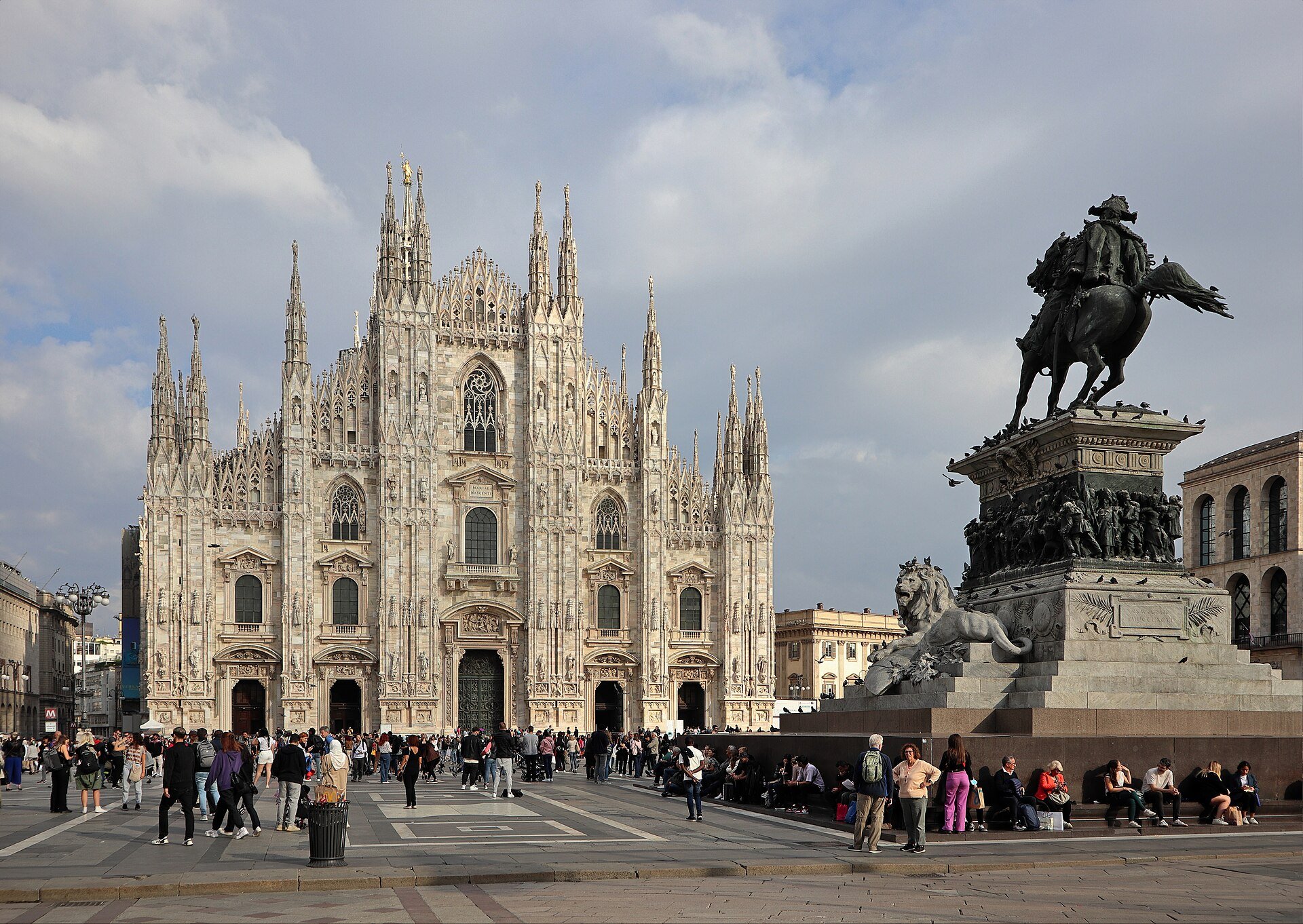
Piazza del Duomo and Milan Cathedral
01

Piazza del Duomo and Milan Cathedral

Selected as the essential starting point, where the cathedral’s layered exterior and surrounding piazza introduce Milan as a city continually shaped by…

~54 min here·5 chapters
Whose Cathedral Is This, Really?Free chapter

The Duomo means two entirely different things depending on who you are — a worshipper or a visitor — and both are simultaneously true.

0:000:00
How One Duke Committed Milan to MarbleFree chapter

A single political decision in 1387 — to swap brick for Candoglia marble — determined the cathedral's colour, its Gothic ambition, and its supply chain for the next six centuries.

0:000:00
Where the Building Began — and Where It Ends

The apse is the oldest part of the cathedral and remains its spatial and visual destination; the nave's rhythm of piers and vaults connects the entrance to that first-built eastern end.
🔓
Unlock 2 more chapters in the app
Get the app →
Piazza Mercanti
02

Piazza Mercanti

Selected as the surviving medieval civic heart, where the Palazzo della Ragione and Loggia degli Osii still express competing forms of communal and dynastic…

~15 min here·3 chapters
Two Buildings, Two Ideas of Power

Piazza Mercanti was Milan's medieval civic heart — a place where two buildings expressed two completely different kinds of authority, side by side.

The Loggia as a Broadcasting Platform

The Loggia degli Osii, commissioned in 1321, was purpose-built civic theatre — its black-and-white marble facade and projecting balcony designed to amplify official power to a crowd.

What Got Added Later — and Why It Shows

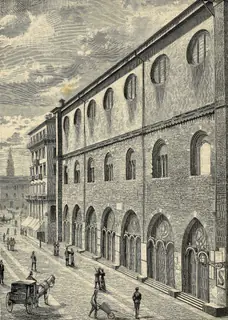
An eighteenth-century addition on top of the Palazzo della Ragione is visibly distinct from the medieval structure, letting you read the building's different layers from the outside.

Galleria Vittorio Emanuele II
03

Galleria Vittorio Emanuele II

Selected as Milan’s great iron-and-glass civic passage, transforming the route between Piazza del Duomo and Piazza della Scala into a public social room.

~5 min here·3 chapters
A Passage Between Two Worlds

The Galleria physically and socially connects Piazza del Duomo to Piazza della Scala, functioning as a covered civic room rather than merely a shopping corridor.

Iron, Glass, and the Art of the Covered Sky

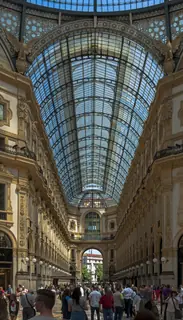
The Galleria's engineering — two crossing arms meeting at a central octagon under an iron-and-glass dome — transforms an outdoor city passage into a sheltered civic room flooded with natural light.

The Arch That Came Ten Years Later

The monumental entrance arch visible from Piazza del Duomo was completed in 1877 — a full decade after the Galleria itself opened in 1867.

Piazza della Scala and Teatro alla Scala
04

Piazza della Scala and Teatro alla Scala

Selected because the restrained exterior of La Scala and its civic square show how Milan can conceal an internationally renowned cultural institution behind an…

~5 min here·3 chapters
The Architect Behind the Understated Facade

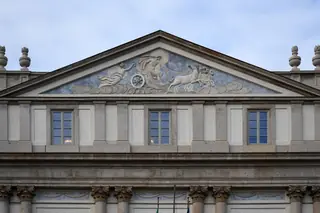
La Scala was born from a fire and an empress's decision, designed by Giuseppe Piermarini and opened in 1778 — and its deliberately restrained street face is the whole point.

What the Street Doesn't Show You

The auditorium — a legendary social and acoustic space — is invisible from the piazza; the museum, opened separately in 1913, offers a conditional glimpse from third-level boxes, not from the street.

Bombed, Rebuilt, and Back in 1946

La Scala was badly damaged in the 1943 Allied bombing of Milan and rebuilt in just three years, reopening in 1946 — a signal of what the city chose to restore first.

Brera District and Pinacoteca
05

Brera District and Pinacoteca

Selected for its atmospheric streets and the publicly accessible spaces of Brera Palace, which reveal how artistic life, education, and civic institutions…

~5 min here·6 chapters
What Is Brera Palace Actually For?

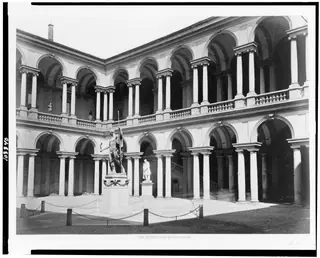
Brera Palace is not just a gallery — it houses an academy, library, observatory, and botanical garden, with the Pinacoteca as one institution among several.

How Napoleon Turned Church Loot Into a Gallery

The academy was founded in 1776 under Maria Theresa; the Pinacoteca opened publicly in 1809 under Napoleon, stocked largely with paintings seized from suppressed churches and convents.

Raphael's Geometry and a Painting's Long Journey

Raphael's Marriage of the Virgin, painted in 1504 and originally from a church in Città di Castello, uses perspective lines in the paving to organise the entire composition — and arrived at Brera in 1805.

🔓
Unlock 3 more chapters in the app
Get the app →
Sforza Castle
06

Sforza Castle

Selected as the tour’s culminating landmark because its defensive exterior, public courtyards, and reconstructed tower make Milan’s shifts from dynastic power…

~5 min here·3 chapters
Two Men, One Castle — Fortress or Palace?

The castle was built in two distinct phases with two completely different purposes — first as a Visconti stronghold, then as a Sforza ducal residence — and those two identities are physically readable from where you stand.

The Tower That Isn't What It Looks Like

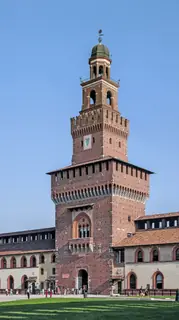
The dramatic central entrance tower is not medieval fabric — it is a 1905 reconstruction by the architect Luca Beltrami, replacing an original that was destroyed in a gunpowder explosion in 1521.

What the Courtyard Holds — Court, Collection, and Michelangelo

Inside the public courtyard, the same space that once served Ludovico Sforza's Renaissance court — hosting Leonardo and Bramante — now houses a civic museum collection that includes Michelangelo's last work, acquired by the city centuries after the Sforzas were gone.

FAQ

How long does this route take?

The audio narration is 40:28 in total. If you pause to look around and take photos, budget 2 hrs. You can pause and resume any time — including the next day.

Is the tour narrated in my language?

This version is narrated in English by rrawi. Other language versions may be available — check the language switcher on this page.

Can I listen without an internet connection?

Yes. This self-guided audio tour works fully offline — download it in the rrawi app before you set off, and GPS automatically triggers the next chapter as you walk. No signal needed.

Do I have to start from the first stop?

No — you can start or jump to any stop in the app. The route works in order, but each stop stands on its own if you need to skip.

What does the free part include?

Different tours offer different free preview chapters depending on the content. Download the rrawi app and purchase the tour to unlock all 23 chapters and experience the full route.

Nearby landmarks

All within 17 minutes on foot — easy to pair in the same route.

Ready to walk Milan?

Download rrawi and let rrawi walk with you.

Walk with the app
First chapter at each stop is free
Get the app