Home › Kumamoto › Suizenji Jojuen: Landscape, Poetry, and Memory
Suizenji Jojuen: Landscape, Poetry, and Memory
Kumamoto · Walking Tour

Suizenji Jojuen: Landscape, Poetry, and Memory

1 hrWalk
0.0 kmDistance
6Stops
18Chapters

About this route

Imagine a garden asking how memory can be made visible, from Suizenji Jojuen's shifting pond views through the reused stone of the Earthquake Restoration Torii and the poetic setting of Kokin Denju no Ma to Izumi Shrine, where former Hosokawa retainers answered devastation by founding a place of worship in 1878.

🎧 Narrated audio tour⬇️ Works offline🌐 English📍 6 stops
Narrated by
rrawi
English

Stops on the route

6 stops · 18 chapters
Suizenji Jojuen Garden
01

Suizenji Jojuen Garden

Selected as the shared entrance to the experience, Suizenji Jojuen introduces the pond, paths, poetic name, and Hosokawa story that guide every later…

~40 min here·5 chapters
The Man Who Started It AllFree chapter

Hosokawa Tadatoshi founded the spring-water retreat in the 1630s that would eventually become Suizenji Jojuen, and his successors completed it as a strolling garden by 1671.

0:000:00
A Garden You Walk, Not WatchFree chapter

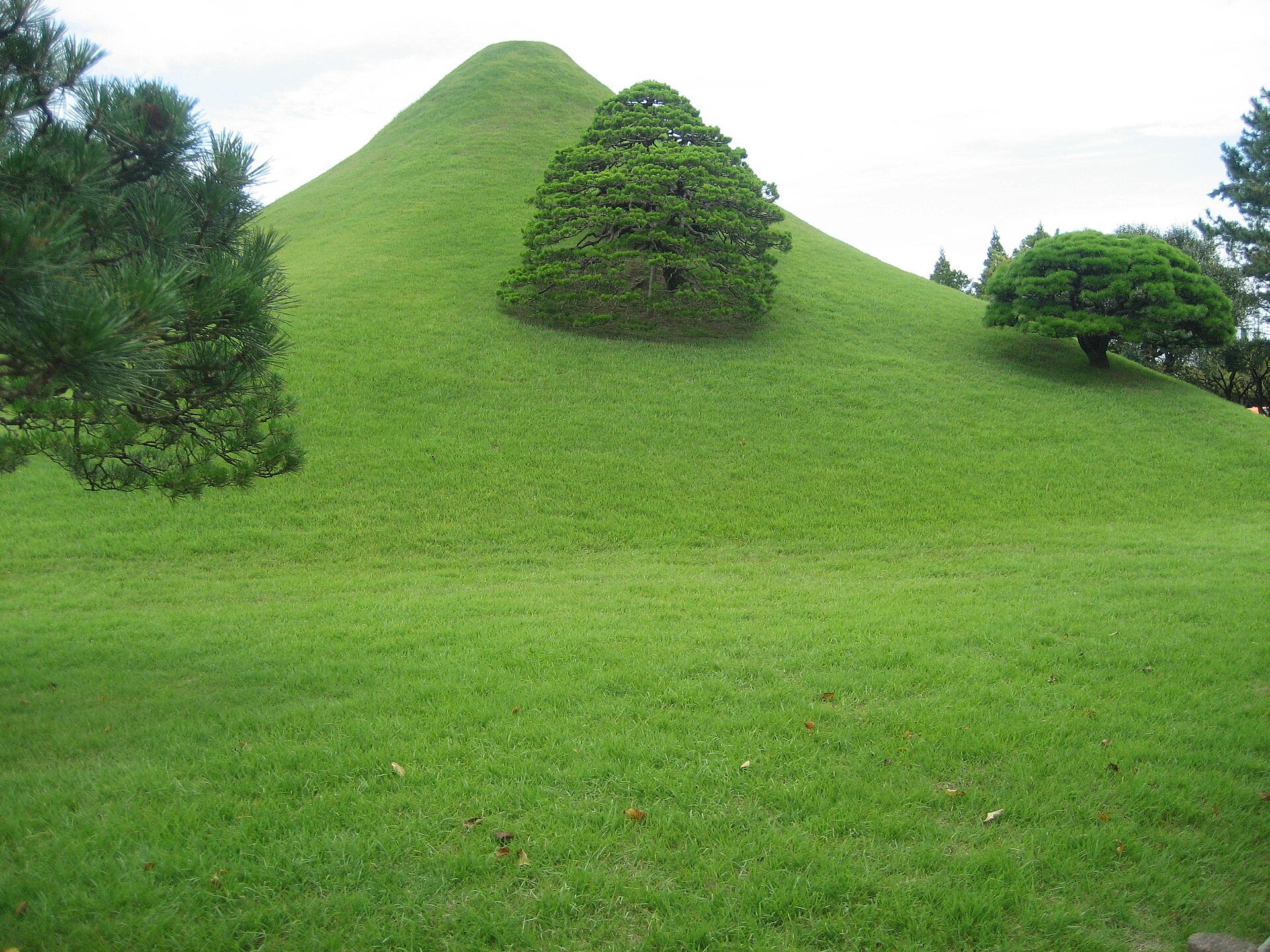
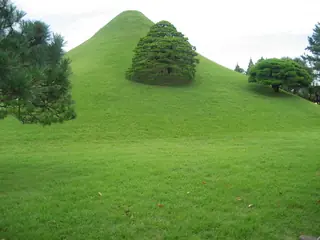
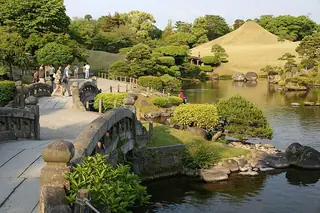
Suizenji Jojuen is a strolling garden whose landscapes — including a Fuji-shaped mound and scenes modeled on the Tokaido road stations — are designed to reveal themselves through movement, not from a fixed vantage point.

0:000:00
What the Shrine Is — and Isn't

Izumi Shrine was established inside the garden in 1878 by former Hosokawa retainers, after the Satsuma Rebellion — it is a commemorative addition, distinct from the Edo-period garden itself, and today it owns and maintains the whole site.
🔓
Unlock 2 more chapters in the app
Get the app →
02

Earthquake Restoration Torii

Essential because its reengineered surviving pillars turn the 2016 earthquakes into a visible story of damage, adaptation, and remembrance.

~8 min here·2 chapters
What the 2016 Earthquakes Left Behind

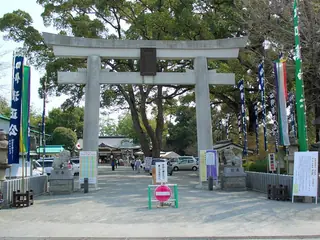
The large torii on the main shrine approach collapsed in the 2016 earthquakes, and only two stone pillars survived the destruction.

How the Restoration Chose to Remember

The surviving pillars were reengineered — not simply reassembled — into a rebuilt torii that is smaller than its predecessor but preserves the same form, making it both a functional gate and a deliberate record of the earthquake.

Pond and Miniature Mount Fuji
03

Pond and Miniature Mount Fuji

Essential because the pond and modeled Mount Fuji reveal how a strolling garden rearranges water, landforms, and buildings as visitors move.

~15 min here·3 chapters
The Mountain the Hosokawa Clan Built From Scratch

The cone-shaped mound across the pond is a deliberate artistic representation of Mount Fuji, shaped by human hands over decades of garden refinement culminating in 1671.

What Changes as You Walk the Circuit

The strolling layout is designed so that the spatial relationship between the mound, the pond, and the buildings shifts continuously as you move — the garden is meant to be experienced in motion, not from a single fixed point.

Where the Pond's Water Actually Comes From

The pond is fed by spring water drawn from the Aso subsoil — and that connection to deep underground geology was dramatically exposed when the April 2016 earthquake drained it completely.

Kokin Denju no Ma
04

Kokin Denju no Ma

Essential because its exterior setting and crafted architectural details connect Hosokawa Yusai with the transmission of classical poetry.

~15 min here·3 chapters
A Building That Arrived in 1912

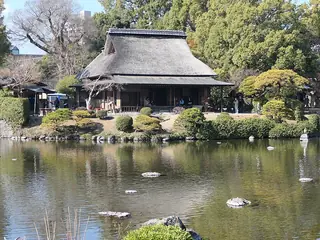
The Kokin Denju no Ma was relocated to Suizenji Jojuen in November 1912 — it was not built here, and its hip-and-gable roof and pond-facing position are the first clues that something is architecturally out of place.

The Craft Written Into the Doors and Window

The building's interior surfaces — the pointed-arch katomado window, the yakusugi cedar sliding doors with their strong grain, and the paulownia motifs painted in a five-seven pattern — give physical form to a poetic tradition, not just a named historical event.

What Hosokawa Yusai Passed On — and to Whom

Kokin denju is the master-to-pupil oral transmission of interpretations of the Kokin Wakashu anthology; Hosokawa Fujitaka, known as Yusai, was the teacher associated with this room, and the named pupil in the official account is Prince Hachijo Toshihito.

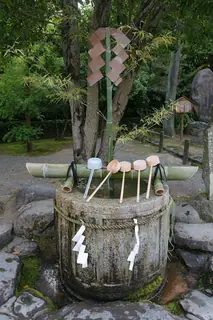
Sacred Water of Longevity
05

Sacred Water of Longevity

Essential because the Aso spring water, the Kesa stone basin, and its association with Hosokawa Tadaoki unite geology, material form, and family memory.

~8 min here·2 chapters
What Name Did This Water Earn?

The spring is traditionally called the water of longevity — a cultural name rooted in belief, not a medical claim.

The Basin Named After a Priest's Robe

The stone basin is called Kesa because its shape resembles a Buddhist priest's draped garment, and it is associated with Hosokawa Tadaoki.

Izumi Shrine
06

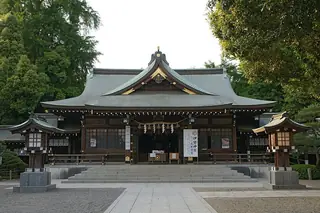
Izumi Shrine

Essential as the tour's conclusion, Izumi Shrine carries Hosokawa memory from garden patronage into worship, wartime loss, and local rebuilding.

~12 min here·3 chapters
Why a Shrine Appeared Inside a Garden

Former Hosokawa retainers founded Izumi Shrine in 1878, one year after the Satsuma Rebellion devastated Kumamoto — linking the garden's peaceful landscape to an act of collective grief and renewal.

Who the Shrine Actually Venerates

The shrine enshrines fifteen deities in total, centered on successive Hosokawa lords and Lady Gracia — a Christian convert whose Latin baptismal name, Gratia, means divine grace.

What the 1973 Memorial Is Actually About

The shrine's main building was destroyed in 1945 — wartime destruction, separate from the 2016 earthquake damage — and the 1973 memorial marks that specific restoration.

FAQ

How long does this route take?

The audio narration is 30:24 in total. If you pause to look around and take photos, budget 1 hr. You can pause and resume any time — including the next day.

Is the tour narrated in my language?

This version is narrated in English by rrawi. Other language versions may be available — check the language switcher on this page.

Can I listen without an internet connection?

Yes. This self-guided audio tour works fully offline — download it in the rrawi app before you set off, and GPS automatically triggers the next chapter as you walk. No signal needed.

Do I have to start from the first stop?

No — you can start or jump to any stop in the app. The route works in order, but each stop stands on its own if you need to skip.

What does the free part include?

Different tours offer different free preview chapters depending on the content. Download the rrawi app and purchase the tour to unlock all 18 chapters and experience the full route.

Ready to walk Kumamoto?

Download rrawi and let rrawi walk with you.

Walk with the app
First chapter at each stop is free
Get the app