HomeRomeRome at Night: From the Spanish Steps to Trastevere · 1 Day
Rome · Walking Tour

Rome at Night: From the Spanish Steps to Trastevere · 1 Day

2 hrsWalk
3.5 kmDistance
7Stops
26Chapters

About this route

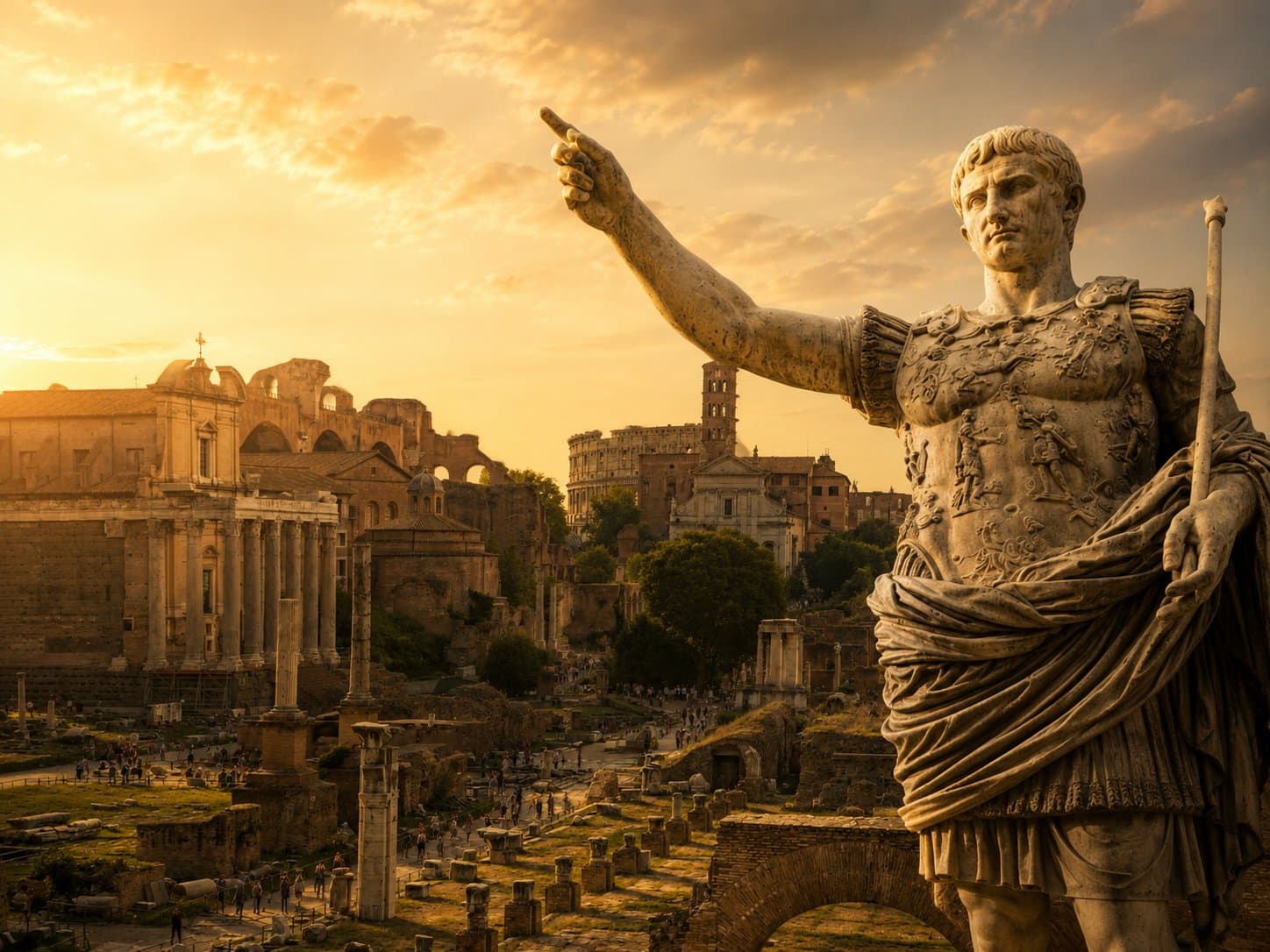
Step into Rome after dark at the Spanish Steps — where Grand Tour poets and painters once made the city their stage — and follow the night through the roaring ancient waters of Trevi, the pagan hush of the Pantheon, the Baroque theater of Piazza Navona, and the wine-soaked shadows of Campo de' Fiori, until you cross the Tiber on Ponte Sisto and arrive in Trastevere, where the city stops performing and simply lives.

🎧 Narrated audio tour⬇️ Works offline🌐 English📍 7 stops
Narrated by
rrawi
English

Stops on the route

7 stops · 26 chapters
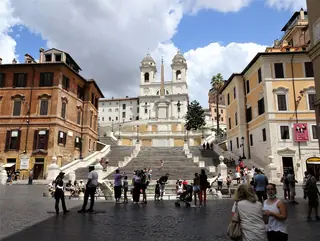
Spanish Steps
01

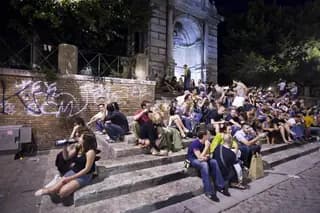
Spanish Steps

Begin at Rome's most romantic international landmark, where the history of travelers, artists, and dreamers becomes especially vivid after dark.

~10 min here·3 chapters
The Puzzle Carved Into the StoneFree chapter

The Spanish Steps balance two competing powers — French royal patronage and papal authority — and that tension is literally written into the stone decoration.

0:000:00
What 135 Steps Actually RequiredFree chapter

The Spanish Steps are a feat of late Baroque design — 135 travertine steps climbing a steep 29-meter slope, engineered to feel graceful rather than grueling.

0:000:00
Who Came Here and Why

The Spanish Steps became the beating heart of Rome's Grand Tour culture — a magnet for foreign poets, artists, painters, and dreamers from across Europe.
Trevi Fountain
02

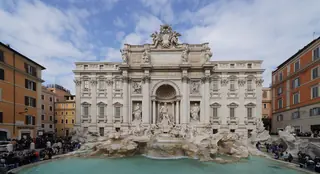
Trevi Fountain

Visit Rome's grandest Baroque fountain, where the coin-toss legend and Fellini's La Dolce Vita turn ancient water into nighttime spectacle.

~10 min here·4 chapters
The Ancient Water Behind the Baroque Spectacle

The water roaring through the Trevi Fountain tonight has been flowing into Rome along the same route for over 2,000 years — built by Marcus Agrippa in 19 BC.

The Architect Who Never Saw His Masterpiece

Nicola Salvi won the commission after a politically charged competition, worked on the fountain for nearly two decades, and died in 1751 — eleven years before it was finished.

Oceanus, the Hippocamps, and 80,000 Cubic Meters a Day

The fountain's central figure is Oceanus — not Neptune — commanding a shell-chariot pulled by two sea horses that represent the sea's two moods, and the whole system recirculates around 80,000 cubic meters of water daily.

🔓
Unlock 1 more chapters in the app
Get the app
Pantheon
03

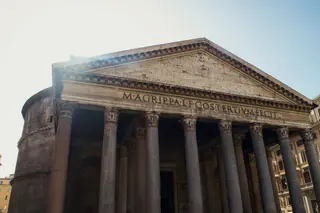
Pantheon

Experience one of ancient Rome's best-preserved monuments, whose dome and oculus give this nighttime route a powerful sense of mystery and eternity.

~20 min here·5 chapters
The Man Whose Name Outlasted His Building

Marcus Agrippa built the original Pantheon in 27 BCE to commemorate the victory at Actium, and his name still reads on the facade — even though Hadrian demolished and completely rebuilt the structure a century later.

Hadrian's Dome and the Geometry of Eternity

Hadrian's rebuilt Pantheon features a 43.3-meter concrete dome — still the world's largest unreinforced concrete dome — engineered so precisely that its diameter exactly equals its height, enclosing a perfect sphere; the coffered ceiling and the open oculus are both structural and optical masterstrokes.

The Pope Who Saved a Pagan Temple

In 609 CE, Pope Boniface IV converted the Pantheon into a Christian church — the first pagan temple in Rome to be officially consecrated — and that act of religious repurposing is the primary reason the building survived intact while nearly every other Roman temple was stripped or demolished.

🔓
Unlock 2 more chapters in the app
Get the app
04

Piazza Navona

See Rome's Baroque theater built over an ancient stadium, where Bernini's fountains and evening street life keep the city's tradition of public spectacle alive.

~20 min here·5 chapters
The Roman Stadium Beneath Your Feet

Piazza Navona's distinctive elongated shape is not an accident of medieval planning — it is the direct footprint of a 30,000-seat Roman athletic stadium built by Emperor Domitian around 80 AD.

How a Pope Turned a Square Into a Stage

In the mid-17th century, Pope Innocent X transformed Piazza Navona into a showcase of Pamphilj family power, commissioning the Fountain of the Four Rivers, the church of Sant'Agnese in Agone, and the adjacent Pamphilj palace as a single, coordinated dynastic statement.

Bernini's Four Rivers and One Obelisk

Bernini's Fountain of the Four Rivers, completed in 1651, represents the four great rivers of the known world and supports an ancient obelisk — and the famous legend that its figures mock Borromini's church is chronologically impossible.

🔓
Unlock 2 more chapters in the app
Get the app
Campo de' Fiori
05

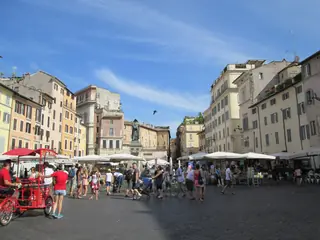
Campo de' Fiori

Discover a square where daytime markets, nighttime bars, and Giordano Bruno's statue reveal the tension between everyday pleasure and religious authority.

~15 min here·4 chapters
The Square That Never Dressed Up

Campo de' Fiori is unusually raw for Rome — no temples, no grand facades, no single architectural vision; it grew organically as a working commercial space.

The Borgia Connection Hidden on a Façade

Vannozza dei Cattanei — mistress of the man who became Pope Alexander VI — owned the square's most prominent inn, and her family arms are still on the building.

The Man Who Refused to Take It Back

Giordano Bruno was burned alive in this square on 17 February 1600, after seven years of imprisonment and a refusal to fully recant his theological and philosophical positions.

🔓
Unlock 1 more chapters in the app
Get the app
Ponte Sisto
06

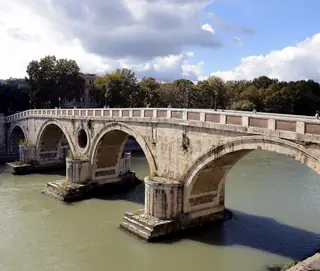
Ponte Sisto

Cross this Renaissance bridge as the route shifts from monumental central Rome into the intimate streets and nightlife of Trastevere.

~5 min here·2 chapters
The Hole in the Pier Nobody Explains

Ponte Sisto's four travertine arches and the occhialone — the circular opening in the central pier — are visible engineering responses to the Tiber's destructive floods, and five papal coats of arms mark it as Sixtus IV's personal project.

Sixtus IV and the Jubilee Bridge

Pope Sixtus IV rebuilt the bridge between 1473 and 1475 specifically to move Jubilee pilgrims safely across the Tiber — replacing an ancient Roman crossing, the Pons Aurelius, that had fallen into ruin — and the bridge remains a living pedestrian link today.

Piazza Trilussa
07

Piazza Trilussa

Finish at the heart of Trastevere's nightlife, where the poet Trilussa's Roman spirit meets today's aperitivo and street culture.

~15 min here·3 chapters
The Poet Who Gave Rome Its Own Voice

Trilussa was a Roman dialect poet and satirist whose sharp, funny, human verse made ordinary Roman speech into literature — and his statue anchors this square tonight.

A Fountain Moved by the Tiber's New Banks

The fountain in this piazza was originally commissioned in 1613 to supply the left bank of the Tiber, then dismantled in 1870 when embankment works remade the riverfront, and reassembled here in 1898 — its incomplete reconstruction still visible today.

What Rome Looks Like When It Relaxes

Piazza Trilussa tonight is a living example of Rome's ancient habit of treating its streets and squares as social spaces — a tradition that has never stopped.

FAQ

How long does this route take?

The audio narration is 44:30 in total. If you pause to look around and take photos, budget 2 hrs. You can pause and resume any time — including the next day.

Is the tour narrated in my language?

This version is narrated in English by rrawi. Other language versions may be available — check the language switcher on this page.

Can I listen without an internet connection?

Yes. Download the tour in the rrawi app before you set off and it plays fully offline — no signal needed while you walk.

Do I have to start from the first stop?

No — you can start or jump to any stop in the app. The route works in order, but each stop stands on its own if you need to skip.

What does the free part include?

Different tours offer different free preview chapters depending on the content. Download the rrawi app and subscribe to a City Pass to unlock all 26 chapters and experience the full route.

Ready to walk Rome?

Download rrawi and let rrawi walk with you.

Walk with the app
First chapter at each stop is free
Get the app