Home › Giza › Giza Pyramids Complex: Reading the Royal Landscape
Giza Pyramids Complex: Reading the Royal Landscape
Giza · Walking Tour

Giza Pyramids Complex: Reading the Royal Landscape

4 hrsWalk
0.0 kmDistance
9Stops
26Chapters

About this route

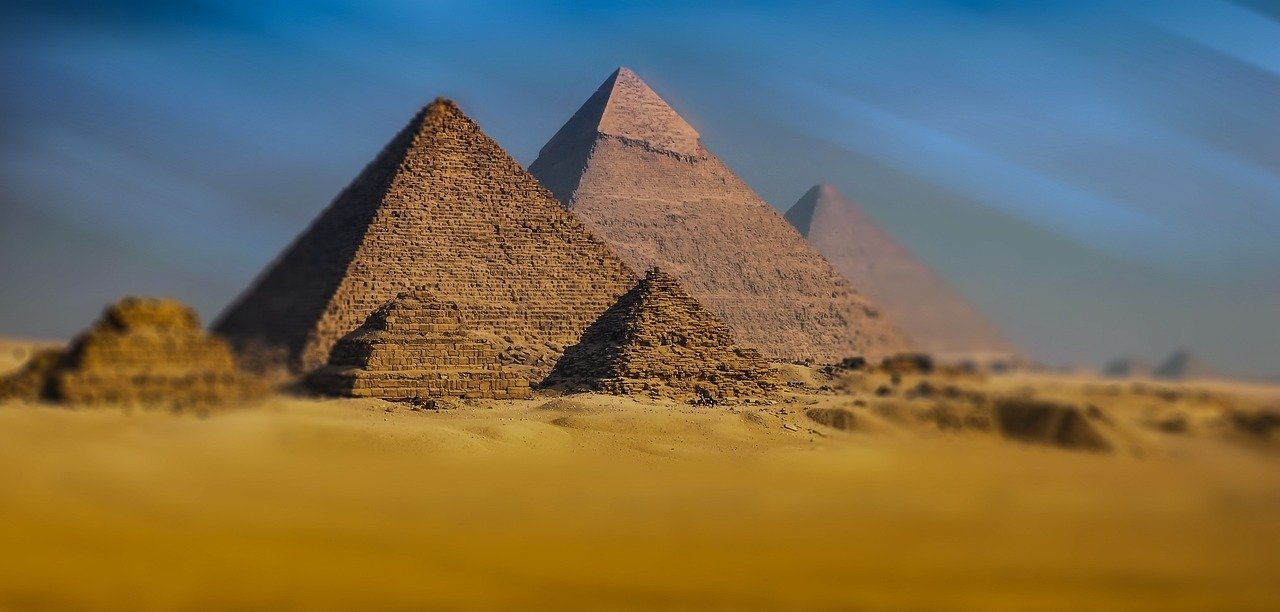
Imagine the pyramids stripped of their postcard frame: from the Giza Plateau’s connected funerary estates, through the contrasting stones of the Khafre Valley Temple and the bedrock body of the Great Sphinx, to Menkaure’s unfinished granite and the ordered tombs of the Eastern Cemetery, the landscape finally resolves at Panorama Point into three distinct royal complexes built across one Fourth Dynasty ridge.

🎧 Narrated audio tour⬇️ Works offline🌐 English📍 9 stops
Narrated by
rrawi
English

Stops on the route

9 stops · 26 chapters
Giza Pyramids Complex
01

Giza Pyramids Complex

Selected as the essential opening frame, the Giza Plateau reveals how pyramids, temples, causeways, and cemeteries formed one connected royal funerary…

~4 hrs here·3 chapters
What You're Actually Looking At HereFree chapter

Giza is not three pyramids in a field — it is three complete royal funerary complexes, each with temples, causeways, and cemeteries, built during Egypt's Fourth Dynasty.

0:000:00
How Stone Tells Time Across Three PyramidsFree chapter

Each of the three pyramids preserves different surviving casing materials — Khafre keeps limestone at its tip, Menkaure retains granite on its lower courses — and these differences are visible evidence of distinct construction choices, not uniform decay.

0:000:00
The City Surrounding the Kings

A documented cemetery stretches east of Khufu's pyramid, placing the plateau in its full context as a landscape where royal family, officials, and priests were buried in an organized field around the king — and where your plateau admission covers the landscape, not automatically every interior.
02

Plateau Orientation and Pyramid Landscape

Essential for orientation, this overview uses base levels, raised terrain, and the lower temple remains to establish how the three royal complexes occupy the…

~15 min here·2 chapters
Which Pyramid Is Actually Bigger?

Khafre's pyramid sits on higher ground than Khufu's, making it appear taller despite being shorter — Khufu's originally reached 146.5 metres versus Khafre's 143.5 metres.

A Royal City, Not Just Three Monuments

The Giza plateau is a Fourth Dynasty funerary landscape — each pyramid is the centrepiece of a full complex of temples and subsidiary structures, not a standalone monument.

03

Khafre Valley Temple

Essential because the Khafre Valley Temple brings the lower ritual landscape into focus through limestone cores, granite facing, monolithic pillars, and an…

~15 min here·3 chapters
Who Was Khafre, and What Did He Build Here

The Khafre Valley Temple is the lower terminus of Khafre's entire pyramid complex — the gateway through which the king's funerary world began.

What the Stones in This Hall Actually Tell You

The temple's interior combines three distinct materials — granite facing over limestone cores, monolithic granite pillars, and alabaster flooring — each chosen deliberately, visible in the same space.

Where the King's Image Once Stood

The hall was designed to hold cult statues of Khafre himself; statues were discovered here and are now held elsewhere — the niches and positions remain, but the figures do not.

Great Sphinx
04

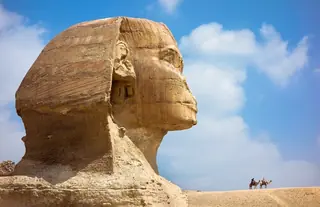
Great Sphinx

Essential to the plateau story, the Great Sphinx joins quarry geology, royal imagery, and two distinct neighboring temples in a single bedrock setting.

~15 min here·3 chapters
What the Rock Itself Tells You

The Sphinx is not a built structure but a single mass of limestone bedrock carved in place within its own quarry enclosure, and the different weathering patterns on its head versus its body are visible evidence of distinct geological strata.

Who Ordered This, and How Certain Are We

Egyptologist Mark Lehner argues the Sphinx was most likely commissioned by the pharaoh Khafre, but this attribution rests on interpreted evidence, not a signed record, and alternative construction sequences remain possible.

Two Buildings in Front of the Sphinx

The Sphinx Temple and the Khafre Valley Temple are two separate, distinct structures beside the Sphinx — not one building — and confusing them misreads the entire spatial arrangement of this part of the plateau.

Great Pyramid of Khufu
05

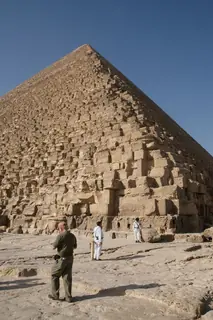
Great Pyramid of Khufu

Essential for understanding Fourth Dynasty engineering, the Great Pyramid contrasts a local limestone core with its nearly vanished fine Tura limestone casing…

~15 min here·3 chapters
What Khufu Ordered Built During His Reign

The Great Pyramid was built as a royal tomb for Pharaoh Khufu during his approximately dated reign in the mid-twenty-sixth century BCE.

Two Different Stones, One Vanished Surface

The pyramid's visible stepped exterior is rough local limestone — the core masonry — not the finished surface; the original smooth outer skin was fine Tura limestone, quarried across the Nile, and is now almost entirely gone.

The Three Chambers Hidden Inside the Stone

The pyramid contains three chambers — one cut into the bedrock below, two built within the pyramid itself — connected by passages including the corbelled Grand Gallery; interior access requires a separate ticket and is not guaranteed.

Pyramid of Khafre
06

Pyramid of Khafre

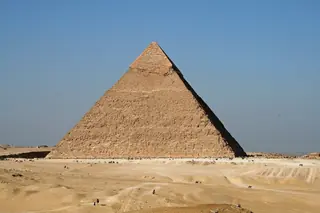
Essential for comparing siting and materials, Khafre’s pyramid combines higher bedrock, a granite lowest casing course, and a surviving cap of Tura limestone.

~15 min here·3 chapters
What the Smooth Cap Above You Is Telling You

The upper portion of Khafre's pyramid still preserves its original polished limestone casing, while the lower two-thirds have been stripped bare — and the lowest original course was granite, not limestone.

The Optical Trick Built Into the Landscape

Khafre's pyramid sits on higher ground than Khufu's Great Pyramid, which is why its peak appears level with or above its neighbor's — but this is a terrain advantage, not a difference in original height.

A Royal Tomb at the Edge of the Living World

Khafre's pyramid was built as his royal tomb, anchoring his place in the Memphite funerary landscape — a city of the dead that mirrored the ambitions of the living.

Pyramid of Menkaure
07

Pyramid of Menkaure

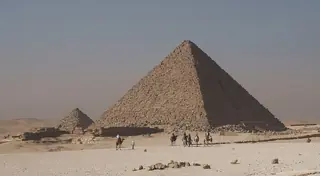
Essential for its different construction story, Menkaure’s pyramid preserves Aswan granite, unfinished dressing, and mudbrick completion that expose a royal…

~15 min here·4 chapters
Who Built the Smallest of the Three

The third and smallest principal pyramid at Giza belongs to Menkaure, the pharaoh who succeeded Khafre, and it served the same royal funerary purpose as its two larger neighbours.

What the Granite on the Lower Courses Tells You

Aswan granite — a much harder, more expensive stone than the local limestone used on the upper courses — covers the lower portion of the pyramid, and some of those granite blocks were never fully dressed, which is readable evidence of an unfinished royal building programme.

How His Successors Finished What He Started

When Menkaure died with the complex unfinished, his successors completed the temples not in the intended limestone-and-granite but in whitewashed mudbrick — a material that reveals the compromise and the urgency.

🔓
Unlock 1 more chapters in the app
Get the app →
08

Eastern Cemetery and Queens Pyramids

Essential to the full landscape, the Eastern Cemetery and Queens Pyramids contrast low mastabas and subsidiary pyramids with Khufu’s immense royal monument.

~15 min here·3 chapters
What the Eastern Cemetery Actually Is

The Eastern Cemetery is a mapped group of Fourth Dynasty monuments — mastaba tombs and three subsidiary pyramids — sitting directly east of Khufu's pyramid, not a single burial site.

The Three Small Pyramids and Their Disputed Queens

Three subsidiary pyramids — G1-a, G1-b, and G1-c — run north to south east of Khufu; their physical positions are documented, but which queens they belonged to remains genuinely uncertain.

Reisner, Meresankh, and What Excavation Revealed

George Reisner's excavations uncovered individual stories within the Eastern Cemetery, including the mastaba of Meresankh III — catalogued as G7530/7540 — which gave the cemetery specific human faces.

09

Panorama Point

Essential as the final viewpoint, Panorama Point places all three principal complexes in one frame and corrects the height illusion created by Khafre’s higher…

~15 min here·2 chapters
The Pyramid That Looks Wrong From Here

From Panorama Point, the three pyramids appear to compete in height — but that visual impression is a trick of the terrain, not a reflection of their true dimensions.

Why Three Kings Built Here, Not Somewhere Else

The Giza pyramids are part of a deliberate royal funerary landscape tied to ancient Memphis, the capital of the Old Kingdom — the plateau was chosen as a necropolis for the most powerful dynasty in Egyptian history.

FAQ

How long does this route take?

The audio narration is 43:15 in total. If you pause to look around and take photos, budget 4 hrs. You can pause and resume any time — including the next day.

Is the tour narrated in my language?

This version is narrated in English by rrawi. Other language versions may be available — check the language switcher on this page.

Can I listen without an internet connection?

Yes. This self-guided audio tour works fully offline — download it in the rrawi app before you set off, and GPS automatically triggers the next chapter as you walk. No signal needed.

Do I have to start from the first stop?

No — you can start or jump to any stop in the app. The route works in order, but each stop stands on its own if you need to skip.

What does the free part include?

Different tours offer different free preview chapters depending on the content. Download the rrawi app and purchase the tour to unlock all 26 chapters and experience the full route.

Ready to walk Giza?

Download rrawi and let rrawi walk with you.

Walk with the app
First chapter at each stop is free
Get the app