Home › Bologna › How Medieval Bologna Built Its Identity
How Medieval Bologna Built Its Identity
Bologna · Walking Tour

How Medieval Bologna Built Its Identity

2 hrsWalk
2.9 kmDistance
8Stops
22Chapters

About this route

Imagine a medieval city deciding who should shape its identity—from the commune declaring itself in Piazza Maggiore, through papal power staged at the Fountain of Neptune and international scholarship organized inside the Archiginnasio, to the water still visible behind the wooden shutter on Via Piella.

🎧 Narrated audio tour⬇️ Works offline🌐 English📍 8 stops
Narrated by
rrawi
English

Stops on the route

8 stops · 22 chapters
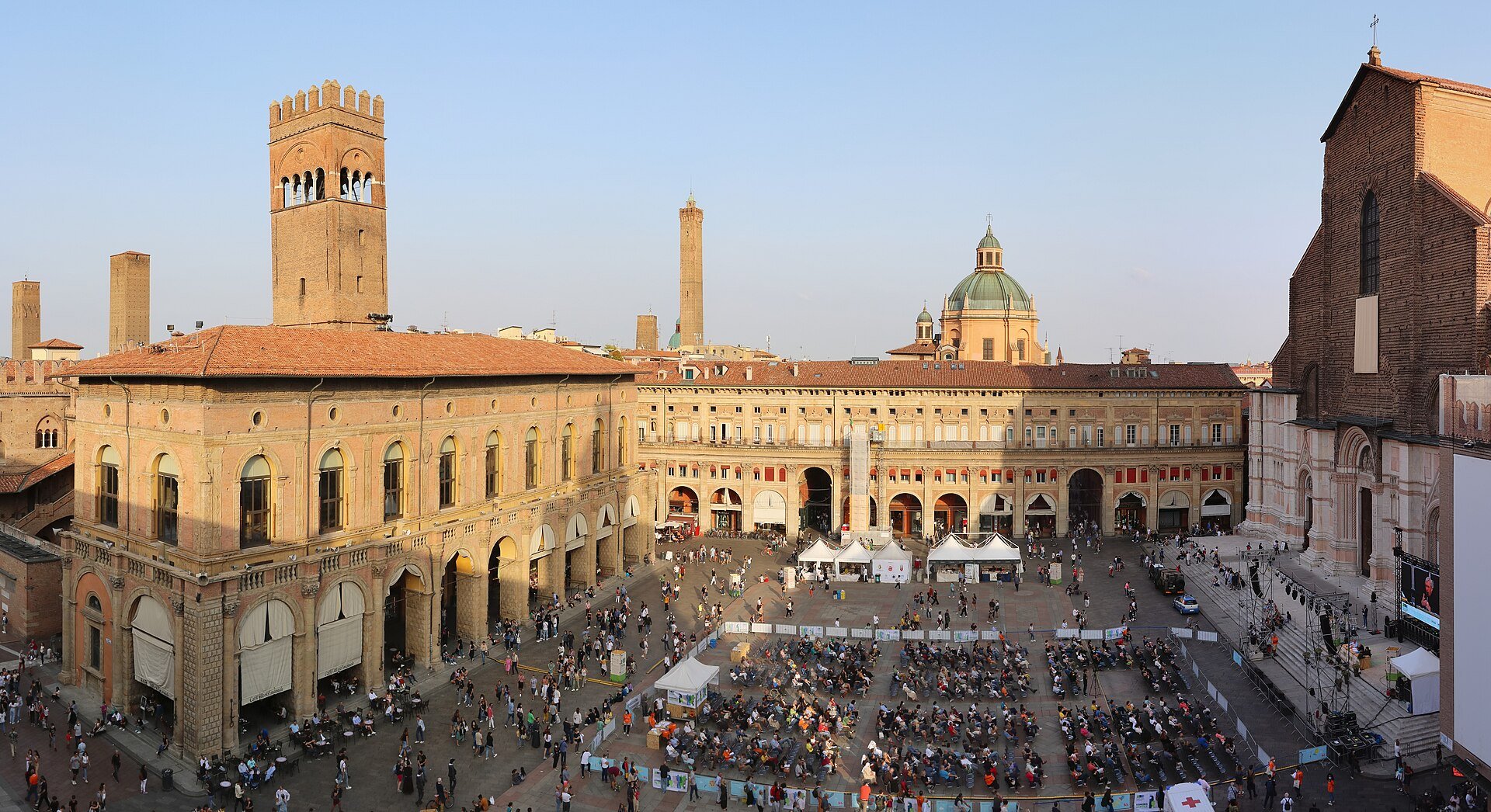
Piazza Maggiore
01

Piazza Maggiore

Selected as the essential starting point because Bologna’s civic living room makes the medieval commune and the competing authority of citizens, guilds,…

~10 min here·2 chapters
How Bologna Decided to Build Its Living RoomFree chapter

Around 1200, Bologna's commune made a deliberate political act — clearing private houses to carve out a shared civic space that announced a new kind of city government.

0:000:00
Four Buildings, Four Competing PowersFree chapter

The buildings framing Piazza Maggiore each represent a different institution — and reading them together reveals how power in medieval Bologna was never held by one hand alone.

0:000:00
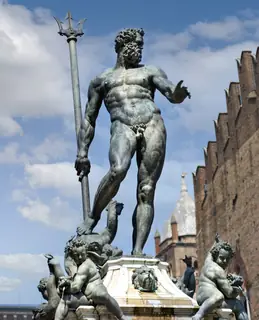
Fountain of Neptune and Piazza del Nettuno
02

Fountain of Neptune and Piazza del Nettuno

Selected because Giambologna’s Neptune turns water, sculpture, and public space into a vivid assertion of papal power beside Bologna’s civic heart.

~5 min here·3 chapters
Why Neptune Rules a Landlocked City

The fountain was a deliberate act of papal political theater, not civic beautification — its imagery of dominion over water was a message about who ruled Bologna.

What Giambologna Built Into the Bronze

The Neptune's composition — a twisting body commanding marine creatures and the four winds — encodes a specific political message about control and dominion.

A Civic Square Turned into a Stage

The placement of the fountain between Piazza Maggiore and the civic buildings transformed public space into a site of ongoing political messaging, where papal and municipal authority existed in visible tension.

Palazzo d'Accursio and Clock Tower
03

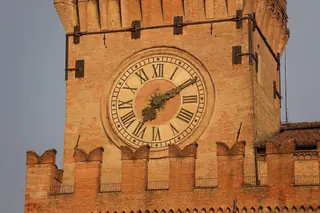
Palazzo d'Accursio and Clock Tower

Selected because its accumulated medieval fabric connects Accursius and Bologna’s legal tradition with the town hall’s control of government and public time.

~15 min here·3 chapters
Two Men Who Shaped This Palace

The Palazzo d'Accursio grew not from a single grand plan but from the merger of a famous jurist's private house with adjacent communal buildings — its name preserving the legal identity that made Bologna famous.

How a City Hall Accumulates Over Centuries

The Palazzo d'Accursio was never designed as a unified building — it grew piece by piece across several centuries, and its 15th-century façade with Niccolò dell'Arca's Madonna reveals how civic pride expressed itself through layered addition rather than single grand gestures.

The Clock Tower and the Ownership of Time

The clock tower on the Palazzo d'Accursio was the commune's way of asserting control over public time — a political act as much as a practical one, placing the measurement of the working day in civic rather than ecclesiastical hands.

Basilica of San Petronio
04

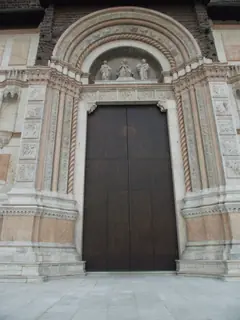
Basilica of San Petronio

Selected because its local patron saint, unfinished facade, and meridian line unite Bologna’s civic ambition, resistance to papal authority, and scientific…

~15 min here·3 chapters
The Civic Ambition Behind San Petronio

San Petronio was built not by the Church but by Bologna's own civic government, as a deliberate statement of municipal pride — choosing the city's own patron saint over St Peter.

The Facade That Power Left Unfinished

The marble cladding stops abruptly midway up the facade because papal interference — not lack of funds or ambition — repeatedly blocked the completion of a church that threatened to overshadow Rome.

When the Church Floor Became a Solar Observatory

In 1655, astronomer Giovanni Domenico Cassini installed a meridian line across the basilica's floor, turning the building into one of the most precise solar observatories in the world.

Archiginnasio of Bologna
05

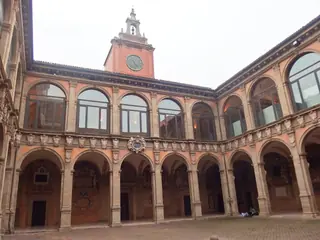
Archiginnasio of Bologna

Selected as the tour’s one substantial interior visit, the Archiginnasio reveals how Europe’s oldest university organized an international community under…

~30 min here·3 chapters
The Man Who United a Fractured University

Cardinal Carlo Borromeo commissioned the Archiginnasio in 1562–1563 to consolidate Bologna's scattered university into one building, reflecting both Counter-Reformation ambitions and civic pride.

Thousands of Coats of Arms, One Global Campus

The corridors and stairways of the Archiginnasio are covered in thousands of student and professor coats of arms, physical evidence of the international community that made Bologna's university Europe's most cosmopolitan medieval institution.

The Anatomical Theatre and Its Watching Figures

The 1637 Anatomical Theatre was a purpose-built space where human dissection was performed under civic and religious oversight, its carved figures — the Spellati — embodying the tension between scientific inquiry and institutional control.

Piazza Santo Stefano and the Seven Churches
06

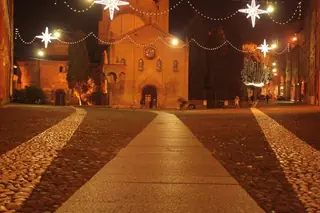
Piazza Santo Stefano and the Seven Churches

Selected because its layered religious complex, association with Saint Petronius, and symbolic Jerusalem reveal Bologna’s intimate scale and centuries of…

~15 min here·3 chapters
What Bishop Petronius Built Here — and Why

The complex originated near a former pagan sanctuary, and tradition credits Bishop Petronius with establishing a Christian presence here in the fifth century, partly to evoke the sacred geography of Jerusalem.

The Architecture of Accumulated Time

The complex is not a single building but a palimpsest of Lombard, Romanesque, and later construction phases — each era adding, altering, or reinterpreting what came before.

The Square as Bologna's Intimate Counter-Scale

Piazza Santo Stefano represents a different register of Bolognese urban life — smaller, more devotional, more neighbourhood-scaled — in contrast to the civic monumentalism of Piazza Maggiore.

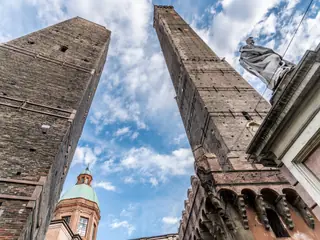
Two Towers: Asinelli and Garisenda
07

Two Towers: Asinelli and Garisenda

Selected because the Asinelli and Garisenda towers embody family defense, status rivalry, and control of the medieval skyline, while the Garisenda adds Dante’s…

~10 min here·2 chapters
Why Did One City Need So Many Towers?

Medieval Bologna's towers were expressions of family power and competition, not just defensive structures.

Asinelli, Garisenda, and the Lean That Alarmed Dante

The two towers differ dramatically in height and lean, and Garisenda's tilt was so pronounced that Dante used it as a simile in the Inferno.

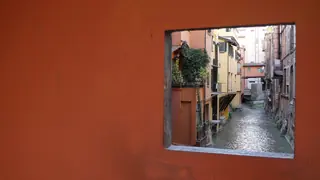
Finestrella di Via Piella
08

Finestrella di Via Piella

Selected as the concluding stop because its surviving canal view exposes the mills, silk industry, and hidden infrastructure that financed Bologna’s visible…

~5 min here·3 chapters
What the Medieval City Ran On

Bologna's canal network — drawing from the Reno and Savena rivers — was the hidden engine that powered the medieval city's grain mills and industry.

Silk, Water, and Bologna's Global Trade

The same canal system that powered grain mills also supported Bologna's internationally significant silk industry, making water the foundation of the city's wealth.

How a City Hides Its Own Infrastructure

Most of Bologna's canal network was covered over as the city modernized, leaving the Finestrella as one of the few surviving glimpses of a system that once defined the city's economy and daily life.

+ 1 more stops in the app

FAQ

How long does this route take?

The audio narration is 43:25 in total. If you pause to look around and take photos, budget 2 hrs. You can pause and resume any time — including the next day.

Is the tour narrated in my language?

This version is narrated in English by rrawi. Other language versions may be available — check the language switcher on this page.

Can I listen without an internet connection?

Yes. This self-guided audio tour works fully offline — download it in the rrawi app before you set off, and GPS automatically triggers the next chapter as you walk. No signal needed.

Do I have to start from the first stop?

No — you can start or jump to any stop in the app. The route works in order, but each stop stands on its own if you need to skip.

What does the free part include?

Different tours offer different free preview chapters depending on the content. Download the rrawi app and purchase the tour to unlock all 22 chapters and experience the full route.

Ready to walk Bologna?

Download rrawi and let rrawi walk with you.

Walk with the app
First chapter at each stop is free
Get the app